
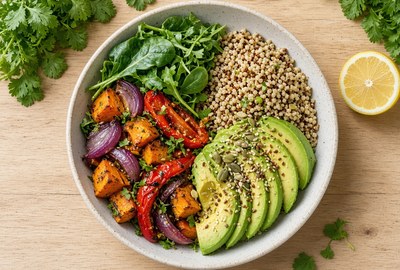
Healthy eating doesn’t have to mean strict rules, expensive superfoods or giving up the foods you love. At its heart it is simple: mostly whole, minimally processed foods, plenty of vegetables, fruit, whole grains and pulses, and a relaxed, enjoyable relationship with food. Small, steady changes add up. Whether you want more energy, better health or just less confusion about what to eat, there are gentle ways to help. Practical habits sit alongside mind tools like mindful eating, visualisation, NLP and hypnosis, which many people use to make healthy choices feel natural. Pick what’s going on for you and we’ll show you where to start.
What’s going on for you?
For a simple first step today.
- Step 1 · Add, don’t subtract
One more vegetable
Add a portion of vegetables or fruit to one meal today. That’s it.
- Step 2 · Use the plate
Half a plate of plants
Fill half your plate with vegetables, a quarter with whole grains and a quarter with protein.
- Step 3 · Watch a short explainer
How food affects your brain
A short video on why this matters is in Videos.
Not quite right? See every method for healthy eating
For making healthy habits stick.
- Step 1 · See it working
Visualisation
Picture yourself enjoying healthy meals with ease.
- Step 2 · Make it automatic
Hypnosis
A relaxed, focused state people use to change eating habits.
- Step 3 · Plan your week
Simple meal planning
Plan three easy dinners and shop for them. Repeat the ones you like.
Not quite right? See every method for healthy eating
For cutting through diet confusion.
- Step 1 · Trust the basics
Follow the consensus
Major health bodies broadly agree: more plants, whole grains and fibre, less ultra-processed food, salt and free sugar.
- Step 2 · Spot fad diets
Learn the red flags
A short TED-Ed video on spotting fad diets is in Videos.
- Step 3 · Ask an expert
A registered dietitian
A dietitian can give advice tailored to you.
Not quite right? See every method for healthy eating
For a calm, kind relationship with food.
- Step 1 · Eat mindfully
Mindfulness
Slow down, enjoy your food and notice fullness.
- Step 2 · Reframe food
NLP
People use it to change how they feel about healthy and less healthy foods.
- Step 3 · Soothe without food
Comfort eating guide
If you eat for comfort, our guide can help.
Not quite right? See every method for healthy eating
Every method for healthy eating
Mind tools for healthy habits
-
Mindfulness
Paying full attention to eating, hunger and fullness. People use it to enjoy food more and eat in tune with their body. Full guide
-
Visualisation
Picturing yourself making healthy choices and enjoying them, so new habits feel familiar. Full guide
-
NLP
Techniques people use to change how they feel about certain foods and build motivation. Full guide
-
Hypnosis
A relaxed, focused state used to strengthen new eating habits. Full guide
Practical foundations
-
The healthy plate
Half vegetables and fruit, a quarter whole grains and a quarter protein, with healthy oils and water.
Everyday practice
-
Fibre and whole grains
Higher fibre and whole-grain intake is linked with lower rates of heart disease, type 2 diabetes and bowel cancer. [1]
Everyday practice
-
Fruit and vegetables
WHO recommends at least 400 g of fruit and vegetables a day. [2]
Everyday practice
-
Meal planning
Planning a few simple meals and shopping for them makes healthy eating far easier.
Everyday practice
More methods with their own hub and guide
-
Relaxation
People use it to reduce stress-driven eating. Full guide
-
Meditation
People use it to build calm and awareness. Full guide
-
EFT Tapping
People use it to ease food cravings. Full guide
-
Psycho-Cybernetics
People use it to build the self-image of a healthy eater. Full guide
-
Yoga
People use it to reconnect with the body. Full guide
Conventional routes
-
A registered dietitian
Personalised advice, especially if you have a health condition.
Support option
-
Your doctor
Your doctor can check your health and refer you to a dietitian if needed.
Support option
Learn more
About healthy eating
What it is, why it happens and what helps. Contents:
- What healthy eating means
- Why it matters
- The basics most experts agree on
- The healthy plate
- Fruit, vegetables and fibre
- Protein and healthy fats
- Foods to enjoy less often
- Drinks
- The Mediterranean way of eating
- Your relationship with food
- Mindful eating
- Building habits that last
- Healthy eating on a budget
- Cutting through diet confusion
- At work and on the go
- Reading food labels
- For the whole household
- How self-help methods fit in
- When to get advice
- FAQs
What healthy eating means
Healthy eating means a varied, balanced diet that gives your body what it needs, built mostly from whole and minimally processed foods, and enjoyed without guilt or rigid rules. It isn’t about perfection or a single “superfood”. It is about your overall pattern of eating over weeks and months. You can explore related topics in our Health hub.
Why it matters
What we eat has a big effect on how we feel and on long-term health. The World Health Organization notes that a healthy diet helps protect against malnutrition and against conditions such as heart disease, diabetes, stroke and some cancers. [2] A large analysis of dietary risks across 195 countries estimated that in 2017, 11 million deaths worldwide were linked to dietary risks, such as low intake of whole grains, fruit and vegetables and high intake of salt. [3] The encouraging side of this is that small improvements in everyday eating can make a real difference. Food affects energy, mood and digestion too. There are short TED-Ed videos on how food affects your brain and gut in Videos.
The basics most experts agree on
Nutrition headlines can be confusing, but the core advice from major health bodies is remarkably consistent:
- Eat plenty of vegetables and fruit.
- Choose whole grains over refined grains.
- Include pulses, nuts and seeds.
- Choose healthier fats, such as olive oil, over saturated and trans fats.
- Limit free sugars and salt.
- Eat less ultra-processed food.
- Drink water as your main drink.
The WHO healthy diet guidance includes at least 400 g of fruit and vegetables a day, limiting free sugars to less than 10% of daily energy, and at least 25 g of fibre a day for everyone over 10. [2]
The healthy plate
A simple way to put this into practice is the healthy plate, used by Harvard’s Nutrition Source and similar to the UK’s Eatwell Guide:
- Half your plate: vegetables and fruit, with variety and colour.
- A quarter: whole grains, such as brown rice, oats, wholewheat pasta or bread.
- A quarter: healthy protein, such as beans, lentils, fish, poultry, eggs, tofu or nuts.
- On the side: healthy oils in moderation, and water, tea or coffee.
You don’t need to measure. Just use the plate as a rough guide at most meals.
Fruit, vegetables and fibre
Fruit and vegetables provide fibre, vitamins, minerals and many beneficial plant compounds. A large meta-analysis of 95 studies found that higher fruit and vegetable intake was associated with lower risk of heart disease, stroke, cancer and early death. [4] Fibre deserves special mention. A series of reviews in The Lancet found that higher fibre and whole-grain intake was associated with lower rates of heart disease, type 2 diabetes and bowel cancer, and recommended increasing fibre and swapping refined grains for whole grains. [1] Easy ways to eat more:
- Add vegetables to sauces, soups and stews.
- Keep frozen vegetables and berries in the freezer.
- Choose oats or wholegrain cereal for breakfast.
- Add beans or lentils to meals.
- Snack on fruit, nuts or vegetable sticks.
Protein and healthy fats
Protein helps you feel full and supports muscles. Good sources include pulses, fish, eggs, poultry, dairy or fortified alternatives, tofu, nuts and seeds. If you are active or building strength, our guide to building muscle has more. Healthy fats, from olive oil, nuts, seeds, avocado and oily fish, are part of a balanced diet. The main advice is to favour these unsaturated fats over saturated fat and trans fat. [2]
Foods to enjoy less often
Healthy eating has room for treats. The aim is to make some foods a smaller part of your overall diet rather than to ban them:
- Sugary drinks and sweets. If sugar has a strong pull for you, see our guide to sugar cravings.
- Salty snacks and processed meats.
- Highly processed foods high in fat, sugar and salt.
- Refined grains, such as white bread, when whole grains are an easy swap.
Drinks
Water is the best everyday drink. Tea and coffee without much sugar are fine for most people. Fruit juice and smoothies are best kept to a small glass, as the sugar is released from the fruit. Sugary soft drinks are one of the easiest things to cut down on. If you drink alcohol, keeping it moderate helps both health and food choices.
The Mediterranean way of eating
The traditional Mediterranean diet, rich in vegetables, fruit, pulses, whole grains, fish, nuts and olive oil, is one of the most studied eating patterns. In the large PREDIMED trial in Spain, people at high risk of heart disease who followed a Mediterranean diet supplemented with extra-virgin olive oil or nuts had a lower rate of major cardiovascular events than those advised to follow a reduced-fat diet. [5] The Mediterranean approach is also sociable and enjoyable, with meals shared and savoured, which makes it easier to stick with.
Your relationship with food
How you feel about food matters as much as what you eat. A healthy relationship with food means eating without guilt, enjoying a wide variety of foods, trusting your hunger and fullness, and not labelling foods or yourself as “good” or “bad”. Research on intuitive eating has linked it with lower levels of disordered eating and with better body image and wellbeing. [6] If you tend to eat for comfort, our guide to comfort eating can help. If you are working on your weight, our guide to weight loss takes a similarly kind approach.
Mindful eating
Mindful eating means slowing down and paying attention to your food and your body. It helps you enjoy meals more, notice when you are satisfied and eat in tune with what your body needs. Try eating one meal a day without screens, taking a few breaths first, putting your fork down between bites and checking in with your hunger halfway through. Zen teacher and physician Jan Chozen Bays describes this as eating “one bite at a time”. Our mindfulness guide has more.
Building habits that last
Lasting change usually comes from small steps rather than big overhauls:
- Start with one change, such as adding a vegetable to lunch.
- Attach it to an existing habit, such as fruit with your morning coffee.
- Make it easy: keep healthy foods visible and ready to eat.
- Plan ahead: a simple weekly meal plan reduces last-minute takeaways.
- Cook in batches and freeze portions.
- Be flexible: aim for most of the time, not all of the time.
- Notice how you feel: more energy and better sleep are great motivators.
Our guides to motivation and procrastination have more on building habits.
Healthy eating on a budget
Healthy eating doesn’t have to be expensive. Some of the healthiest foods are also among the cheapest:
- Dried or tinned beans, lentils and chickpeas.
- Oats, brown rice and wholewheat pasta.
- Frozen vegetables and fruit, which are just as nutritious.
- Tinned fish, such as sardines or mackerel.
- Eggs.
- Seasonal produce.
Cooking at home, planning meals and using leftovers all help keep costs down.
Cutting through diet confusion
New diets appear all the time, often promising fast results. Be cautious of anything that bans whole food groups, promises rapid weight loss, relies on special products or sounds too good to be true. The most reliable advice tends to be the least exciting: plenty of plants, whole foods, sensible portions and enjoyment. There is a short TED-Ed video on spotting fad diets in Videos.
Eating well at work and on the go
Busy days are when healthy eating most often slips. A little planning helps. Keep a few healthy snacks in your bag or desk, such as fruit, nuts or oatcakes. Take leftovers from dinner for lunch. If you buy food out, look for options with vegetables, whole grains and protein, such as a salad with beans, a vegetable soup or a wholegrain wrap. Carry a water bottle so you are not relying on sugary drinks. And try to take a proper break to eat, rather than eating at your desk while working, so you notice and enjoy your food.
Reading food labels
Food labels can help you make quick comparisons. Look at the ingredients list, which is ordered by weight, so the first few ingredients make up most of the food. Check sugar, salt and saturated fat per 100 g to compare similar products. Many countries use simple front-of-pack labels, such as traffic-light colours, to help. As a rule of thumb, foods with a short list of recognisable ingredients are usually less processed. You don’t need to read every label. Just check the foods you buy often and find a few better swaps.
Healthy eating for the whole household
Healthy habits are easier when the people around you share them. Cook together, try new vegetables as a family and keep fruit and healthy snacks easy to reach. Children often need to try a new food many times before they like it, so keep offering without pressure. Eating together at a table, without screens, is a lovely habit for everyone. Most of all, model a relaxed relationship with food: enjoy treats without guilt, avoid calling foods “good” or “bad”, and talk about how food helps you feel strong and energised.
Remember that healthy eating is a long game. Nobody eats perfectly, and one meal, one day or one holiday doesn’t undo the benefits of your usual pattern. Aim for progress, keep it enjoyable and build on what works for you.
How self-help methods fit in
Knowing what to eat is often the easy part. Doing it consistently is where mind tools help. Mindfulness helps you eat with awareness and enjoyment. Visualisation helps you rehearse healthy choices. NLP and hypnosis are used to change how foods feel to you and to strengthen new habits. If stress drives your eating, relaxation and our guide to stress management can help.
When to get advice
Talk to your doctor or a registered dietitian if you have a health condition such as diabetes, heart disease, kidney disease, food allergies or digestive problems, if you are pregnant, or if you are considering a major change to your diet. They can give advice tailored to you. If food or eating causes you distress, your doctor can also help. Directories for several countries are in Get help & sources.
Frequently asked questions
What is a healthy diet?
A healthy diet is varied and balanced, built mostly from whole and minimally processed foods, with plenty of vegetables, fruit, whole grains and pulses, and limited free sugars, salt and unhealthy fats. [2]
How much fruit and vegetables should I eat?
WHO recommends at least 400 g of fruit and vegetables a day, roughly five portions. [2]
What is the healthy plate?
A simple guide: half your plate vegetables and fruit, a quarter whole grains and a quarter healthy protein, with healthy oils and water.
Why is fibre important?
Higher fibre and whole-grain intake is associated with lower rates of heart disease, type 2 diabetes and bowel cancer. [1]
Is the Mediterranean diet healthy?
It is one of the best-studied eating patterns. In the PREDIMED trial, a Mediterranean diet with olive oil or nuts lowered the rate of major cardiovascular events in high-risk people. [5]
What is a healthy relationship with food?
Eating without guilt, enjoying a variety of foods, trusting hunger and fullness, and not labelling foods as good or bad. Intuitive eating has been linked with better body image and wellbeing. [6]
Can I eat healthily on a budget?
Yes. Beans, lentils, oats, frozen vegetables, eggs and tinned fish are healthy and affordable, and meal planning helps reduce waste.
The best videos on healthy eating
Hand-picked and checked one by one: public health bodies, researchers and nutrition professionals, plus mindful eating.
Why food matters
Making it easy
Your relationship with food
Books on healthy eating
Free resources
Experts to follow
Get help
Talk to your doctor or a registered dietitian before making major changes to your diet, especially if you have a health condition or are pregnant.
Find a therapist or counsellor
- US and Canada: Psychology Today (US) and (Canada) directories.
- UK: BACP therapist directory.
- Australia: APS Find a Psychologist, and Relationships Australia for couple and family services.
- Elsewhere, including Europe and India: ask your doctor or local health service for a referral, and check that anyone you see is registered or accredited where you live.
This hub is for information, not a substitute for medical or psychological care.
Sources
- Reynolds et al. (2019), Carbohydrate quality and human health: a series of systematic reviews and meta-analyses, The Lancet 393(10170):434-445
- World Health Organization, Healthy diet fact sheet
- GBD 2017 Diet Collaborators (2019), Health effects of dietary risks in 195 countries, 1990–2017, The Lancet 393(10184):1958-1972
- Aune et al. (2017), Fruit and vegetable intake and the risk of cardiovascular disease, total cancer and all-cause mortality, International Journal of Epidemiology 46(3):1029-1056
- Estruch et al. (2018), Primary prevention of cardiovascular disease with a Mediterranean diet supplemented with extra-virgin olive oil or nuts, New England Journal of Medicine 378(25):e34
- Linardon, Tylka & Fuller-Tyszkiewicz (2021), Intuitive eating and its psychological correlates: a meta-analysis, International Journal of Eating Disorders 54(7):1073-1098
Written by Saj Ali. Last updated 30 October 2026. Spotted an error? Tell us and we will fix it.