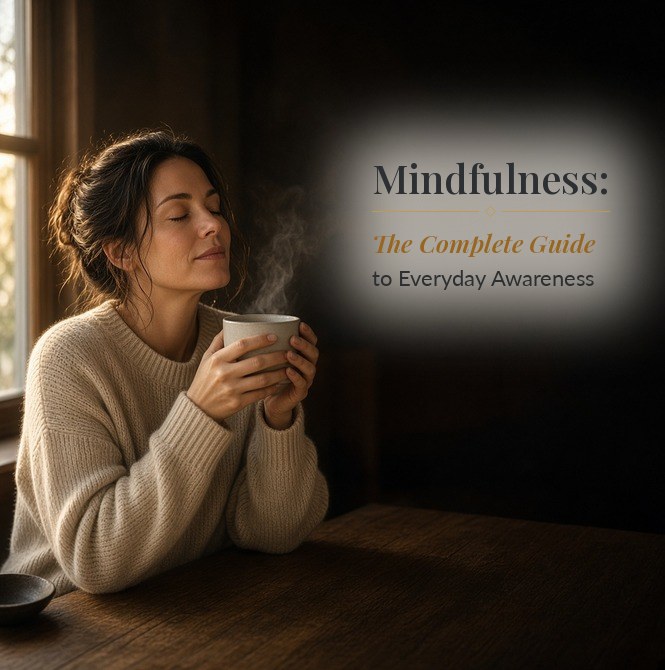
Mindfulness is a way of paying attention to what is happening right now, inside and around you, on purpose and without judging it. It can be trained through short practices and brought into ordinary moments such as eating, walking or working. Courses based on it can help with stress, anxiety and recurrent depression, though effects are usually modest. Start with our complete guide.
Mindfulness is a way of paying attention to what is happening right now, inside and around you, on purpose and without judging it. It can be trained through short practices and brought into ordinary moments such as eating, walking or working. Courses based on it can help with stress, anxiety and recurrent depression, though effects are usually modest.
This hub is the home on Self Help Supermarket for Mindfulness. Our complete guide explains the method, the evidence and its limits. As we check them, videos, podcasts, courses, books and practitioner directories for Mindfulness are added to this page.
This hub is for general information and self-education. It is not a replacement for medical or psychological care.
Start here
New to Mindfulness? Our complete guide covers MBSR and MBCT, formal and informal practice, six practices to try, the honest evidence, the criticisms ("McMindfulness") and whether mindfulness is safe.
Mindfulness is a way of paying attention to what is happening right now, inside and around you, on purpose and without judging it. It can be trained through…
NICE recommends MBCT as an option to help prevent relapse for people who have recovered from depression but are at higher risk of it coming back, and lists group mindfulness among the treatments for less severe depression (NICE NG222).
The benefits are real but modest. Large reviews find small to moderate improvements in anxiety, depression and stress, usually no better than other active treatments such as exercise or therapy (Goyal et al., 2014; Galante et al., 2021).
It isn't for everyone. The UK's biggest schools trial found that classroom mindfulness lessons were no better than usual teaching (Kuyken et al., 2022), and some people have unpleasant effects.
You will find the full evidence, with sources, in the complete guide.
Before you start: For most people mindfulness is safe, but it isn't risk-free: in one study of an eight-week course, 83% reported at least one meditation-related side effect, and 6 to 14% had lasting bad effects. Learn from a qualified teacher if you have mental health difficulties, keep practices short at first, and it's OK to stop. If you are in crisis or thinking of harming yourself, contact your local emergency number or find a helpline in your country at findahelpline.com (in the US, call or text 988).
Read our complete guide first. It explains Mindfulness step by step and says plainly what the evidence does and does not show.
Is mindfulness the same as meditation?
Not quite. Meditation is a set of practices, and mindfulness meditation is one type. Mindfulness itself is a quality of attention that you can bring to anything, from washing up to a difficult conversation. Formal meditation is one of the main ways to train it.
Does mindfulness actually work?
For some things, yes, but the effects are usually modest. Large reviews find small to moderate improvements in anxiety, depression, stress and pain, usually similar to other active treatments such as exercise or therapy. The best evidence is for MBCT, which reduces the risk of depression coming back in people who've had it several times.
How long does it take for mindfulness to work?
Most courses last eight weeks, and research usually measures results at the end of that time. Some people feel calmer after a single session, but the benefits of mindfulness generally build gradually with regular practice.
How long should I practise each day?
On an MBSR course, home practice is about 45 to 60 minutes a day, but there's no magic number. If you're starting on your own, 10 minutes a day is a realistic goal, and even a few mindful breaths during the day count. Regular short practice is better than occasional long sessions.
Can mindfulness be harmful?
It can, for a minority of people. Unpleasant effects such as anxiety, low mood or feeling detached are fairly common and usually short-lived, but a small number of people have lasting difficulties. Take extra care if you have a history of trauma, psychosis, bipolar disorder or severe depression, learn with a qualified teacher, and stop if you feel overwhelmed.
Can I do mindfulness if my mind is always busy?
Yes. Everyone's mind wanders, and noticing when yours has wandered is the practice, not a sign you're failing. If sitting still is hard, try walking practice, mindful movement or very short practices such as STOP.
Get listed
Do you teach or practise Mindfulness? We are building a directory of trusted practitioners, courses and apps for every technique. Get in touch to be listed.
This hub is for general information and self-help education. It is not medical or psychological advice. External resources are selected by our editors and checked when listed; we are not responsible for third-party content.