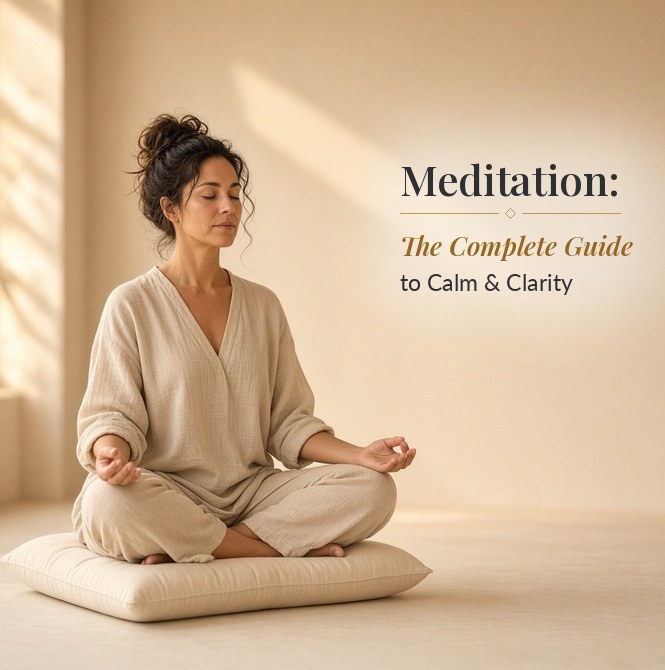
Meditation is a family of mental training practices that use focused attention, open awareness or deliberate kindness to steady the mind and change how you relate to thoughts and feelings. Rooted in Hindu, Buddhist and other contemplative traditions, it has good evidence for modest benefits for stress, anxiety, depression relapse and pain. Start with our complete guide.
Meditation is a family of mental training practices that use focused attention, open awareness or deliberate kindness to steady the mind and change how you relate to thoughts and feelings. Rooted in Hindu, Buddhist and other contemplative traditions, it has good evidence for modest benefits for stress, anxiety, depression relapse and pain.
This hub is the home on Self Help Supermarket for Meditation. Our complete guide explains the method, the evidence and its limits. As we check them, videos, podcasts, courses, books and practitioner directories for Meditation are added to this page.
This hub is for general information and self-education. It is not a replacement for medical or psychological care.
Start here
New to Meditation? Our complete guide covers the main types of meditation, how to start in ten steps, building a habit, common obstacles, what the evidence says and the risks and side effects.
Meditation is a family of mental training practices that use focused attention, open awareness or deliberate kindness to steady the mind and change how you relate to thoughts…
The benefits are real but modest. A major review of 47 trials found moderate evidence that meditation programmes ease anxiety, depression and pain, with effects similar in size to those of antidepressants in primary care, but no better than other active treatments such as exercise or therapy (Goyal et al., 2014).
It is not risk-free. In one careful study, 6–14% of people on mindfulness courses had lasting negative effects, such as anxiety, intrusive memories or feeling detached (Britton et al., 2021). Start gently, especially if you have a history of trauma or psychosis.
You will find the full evidence, with sources, in the complete guide.
Before you start: Meditation can have side effects. In one careful study, 6 to 14% of people on mindfulness courses had lasting negative effects such as anxiety, intrusive memories or feeling detached. Start gently, especially if you have a history of trauma or psychosis, and stop and seek help if practice makes you feel worse. If you are in crisis or thinking of harming yourself, contact your local emergency number or find a helpline in your country at findahelpline.com (in the US, call or text 988).
Read our complete guide first. It explains Meditation step by step and says plainly what the evidence does and does not show.
Which type of meditation is best for beginners?
A short guided breath meditation or body scan is the easiest place to start. Guided practice from an app, a free recording or a class helps you know what to do. If one type doesn't suit you, try another; there's no single best type.
How long should I meditate each day?
Start with 5–10 minutes a day and build up to 20 minutes if you want to. Daily short practice is more useful than occasional long sessions. Many research programmes last eight weeks.
How long does it take for meditation to work?
Some people feel calmer after a single session, but most studies measure benefits after six to eight weeks of regular practice. Give it at least that long before deciding whether it helps.
Can meditation help me sleep?
It can improve sleep quality modestly, and body scans or yoga nidra can help you wind down. For long-term insomnia, CBT for insomnia is the most effective treatment.
Is meditation safe?
For most people, yes, but it isn't risk-free. Some people experience anxiety, low mood, intrusive memories or feeling detached, especially during intensive retreats. People with trauma, psychosis or bipolar disorder should get advice and use a qualified, trauma-aware teacher.
What if I can't stop thinking when I meditate?
That's normal. Meditation isn't about stopping thoughts. Each time you notice you've drifted and come back, you are strengthening attention. A session full of wandering is still a useful session.
Get listed
Do you teach or practise Meditation? We are building a directory of trusted practitioners, courses and apps for every technique. Get in touch to be listed.
This hub is for general information and self-help education. It is not medical or psychological advice. External resources are selected by our editors and checked when listed; we are not responsible for third-party content.