
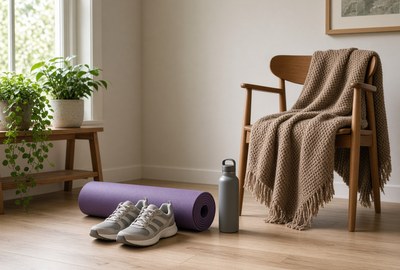
Arthritis and joint pain affect hundreds of millions of people around the world, and osteoarthritis, the most common type, often shows up as stiff, achy knees, hips, hands or back. The encouraging news is that there is a lot you can do yourself. International guidelines put exercise, weight management and self-management at the heart of care, and gentle practices such as tai chi and yoga are recommended too. On this page you’ll find what arthritis is, the self-help steps with the strongest backing, and calming methods that many people use alongside them. Pick what’s going on for you and we’ll show you where to start.
What’s going on for you?
For a sore, stiff day.
- Step 1 · Warm or cool
Heat or cold
Many people find warmth eases stiffness.
- Step 2 · Move gently
Little and often
Gentle range-of-motion moves keep joints supple.
- Step 3 · Pace yourself
Balance rest and activity
Break tasks into smaller chunks.
Not quite right? See every method for arthritis and joint pain
For starting an exercise routine.
- Step 1 · Start small
Ten minutes
A short daily walk or gentle routine.
- Step 2 · Strengthen
Muscles support joints
Simple strength moves for knees and hips.
- Step 3 · Try tai chi
Slow, flowing movement
Recommended in arthritis guidelines.
Not quite right? See every method for arthritis and joint pain
For when pain affects your mood.
- Step 1 · Relax your body
Relaxation
Easing tension can soften pain.
- Step 2 · Calm the mind
Hypnosis
Many use it for comfort and calm.
- Step 3 · Learn pain skills
Pain relief guide
More tools for living well with pain.
Not quite right? See every method for arthritis and joint pain
For long-term joint health.
- Step 1 · Keep active
Most days
Mix walking, strength and balance.
- Step 2 · Healthy weight
Less load
Weight loss eases pressure on knees.
- Step 3 · Gentle yoga
Flexibility and calm
Chair or gentle yoga for joints.
Not quite right? See every method for arthritis and joint pain
Every method for arthritis and joint pain
Self-help practices
-
Exercise
Exercise reduced knee pain and improved function in a Cochrane review of 44 trials. [1]
Everyday practice
-
Weight management
Diet plus exercise brought meaningful weight loss and less knee pain in overweight adults. [2]
Everyday practice
-
Tai chi
Tai chi helped knee osteoarthritis as much as physical therapy in a trial of 204 people. [3]
Everyday practice
-
Self-management
Learning about your condition and how to manage it is strongly recommended. [4]
Everyday practice
Methods that pair well
-
Yoga
Gentle stretching, strength and breathing for stiff joints. Full guide
-
Relaxation
Releasing muscle tension and easing stress around pain. Full guide
-
Reiki
A gentle hands-on relaxation practice many people enjoy. Full guide
-
Hypnosis
Using focused relaxation for comfort and calm. Full guide
More methods with their own hub and guide
-
Qi Gong
Slow, flowing movement and breathing, related to tai chi. Full guide
-
Mindfulness
Noticing pain with less struggle and more kindness. Full guide
-
Meditation
Calming the mind and easing stress. Full guide
-
CBT (cognitive behavioural therapy)
Practical skills for living well with long-term pain. Full guide
-
Breathwork
Slow breathing to relax the body. Full guide
Expert guidance
-
GP or family doctor
Diagnosis, treatment options and referral when needed.
Support option
-
Physiotherapist or physical therapist
A personalised exercise plan for your joints.
Support option
Learn more
About arthritis and joint pain
What it is, why it happens and what helps. Contents:
- What is arthritis?
- Osteoarthritis
- Other types of arthritis
- Common symptoms
- Who gets it?
- What the guidelines recommend
- Exercise
- Strength and balance
- Tai chi
- Yoga
- Weight and joints
- Heat, cold and comfort
- Pacing and daily life
- Mind, mood and pain
- Sleep
- Food and joints
- A simple 30-day plan
- How self-help methods fit in
- FAQs
What is arthritis?
Arthritis is a general term for conditions that cause pain, stiffness and sometimes swelling in the joints. There are more than 100 types. The most common is osteoarthritis, followed by inflammatory types such as rheumatoid arthritis. Joint pain can also come from injuries, overuse or other conditions. This page focuses mainly on self-help for osteoarthritis and everyday joint pain. If you have new, severe or unexplained joint symptoms, it’s a good idea to see your doctor for a diagnosis. You can explore related topics in our Health hub, including pain relief, back and neck pain and fibromyalgia.
Osteoarthritis
Osteoarthritis (OA) affects the whole joint, including the cartilage that cushions the ends of bones, the bone underneath, the lining of the joint and the surrounding muscles and ligaments. Joints are constantly repairing themselves, and in OA this process is under more strain. It most often affects the knees, hips, hands and spine. Many people with OA lead full, active lives, and symptoms often go up and down over time rather than steadily getting worse.
Other types of arthritis
Inflammatory arthritis, such as rheumatoid arthritis, psoriatic arthritis and ankylosing spondylitis, happens when the immune system causes inflammation in the joints. Gout is caused by crystals forming in a joint. These conditions usually need medical treatment, and early diagnosis helps. The self-help ideas on this page, such as gentle exercise, relaxation and good sleep, can sit alongside the care your medical team recommends.
Common symptoms
- Joint pain, often worse after activity or at the end of the day.
- Stiffness, especially after rest or first thing in the morning.
- Reduced range of movement.
- Creaking or grinding sounds.
- Some swelling around the joint.
- Muscle weakness around the affected joint.
Who gets it?
Osteoarthritis is very common. The Global Burden of Disease study estimated that 595 million people worldwide had osteoarthritis in 2020, around 7.6% of the global population, with the knee the most commonly affected joint. [5] It becomes more common with age, and other factors include previous joint injury, family history, being overweight and the demands of certain jobs and sports. Arthritis charities in the UK, the US, Canada and Australia all offer free information and support, listed in Free resources.
What the guidelines recommend
Major international guidelines agree on the core of self-care. The 2019 American College of Rheumatology and Arthritis Foundation guideline strongly recommends exercise, weight loss for people who are overweight, self-management programmes, tai chi and, for knee and hip OA, a cane where helpful. It also conditionally recommends balance exercises, yoga, cognitive behavioural therapy, acupuncture and heat or cold. [4] The Osteoarthritis Research Society International (OARSI) guidelines also place structured exercise and education at the centre of care. [6] The UK’s NHS and the US National Institutes of Health offer similar advice.
Exercise
It can feel natural to rest a painful joint, but movement is one of the best things you can do. A Cochrane review of 44 trials involving more than 3,500 people with knee osteoarthritis found that exercise reduced pain and improved physical function. [1] Good options include walking, cycling, swimming, water exercise and gentle strength routines. Start small, build up slowly and choose something you enjoy. Some aching during or after exercise is normal and usually settles. The Arthritis Foundation and Arthritis UK routines in Videos are a great place to begin.
Strength and balance
Strong muscles help support and protect joints. For knees, exercises such as sit-to-stands from a chair, straight leg raises and step-ups work the thigh muscles. For hips, side leg raises and bridges help. Balance exercises, such as standing on one leg while holding a counter, help steadiness and confidence. Aim for strength work two or three times a week. A physiotherapist or physical therapist can tailor a plan to you.
Tai chi
Tai chi is a gentle Chinese practice of slow, flowing movements combined with breathing and focus. In a trial led by Chenchen Wang with 204 people with knee osteoarthritis, tai chi twice a week for 12 weeks improved pain and function as much as standard physical therapy, and those doing tai chi had greater improvements in mood and quality of life, with benefits lasting to a year. [3] Dr Paul Lam’s Tai Chi for Arthritis programme is taught in many countries, and you can try it in Videos. Qigong is a related practice that many people enjoy.
Yoga
Gentle yoga combines stretching, strengthening, balance and relaxation. Many people with arthritis find chair yoga or slow, gentle classes especially comfortable. The ACR guideline conditionally recommends yoga for knee osteoarthritis. [4] Tell your teacher about your joints and skip or adapt any pose that causes sharp pain. Johns Hopkins’ chair yoga session in Videos is a good gentle start, and our yoga guide explains more.
Weight and joints
Every step puts more than your body weight through your knees, so even modest weight loss can ease the load. In a trial led by Stephen Messier with 454 overweight and obese adults with knee osteoarthritis, people who combined diet and exercise lost about 10% of their body weight on average and had less pain and better function than those using exercise alone. [2] If weight is something you’d like to work on, our guides to weight loss and healthy eating can help.
Heat, cold and comfort
Many people find warmth soothing for stiffness, such as a warm bath, shower or heat pack, especially in the morning. Cold packs wrapped in a cloth can ease a joint that feels hot or swollen after activity. Supportive footwear, a walking stick used in the opposite hand to a painful knee or hip, and gadgets such as jar openers and long-handled tools can make daily life easier. An occupational therapist can suggest helpful aids.
Pacing and daily life
Pacing means balancing activity and rest so you can do more over the week without big flare-ups. Break tasks into smaller parts, alternate heavy and light jobs, and take short breaks before pain builds. Keep moving on good days without overdoing it. Many people find a simple diary helps them spot patterns. Self-management programmes, offered by arthritis charities and health services in many countries, teach these skills and are strongly recommended in guidelines. [4]
Mind, mood and pain
Pain and mood are closely linked. Long-term pain can bring frustration, worry or low mood, and stress and tension can make pain feel worse. Calming practices can help break this cycle. Relaxation, mindfulness and slow breathing help ease tension. Hypnosis has been studied for pain, and a review of 85 controlled experimental trials found that hypnotic suggestions reduced pain for many participants. [7] Cognitive behavioural therapy is conditionally recommended in the ACR guideline. [4] Many people also enjoy Reiki as a gentle, relaxing experience. Our guide to pain relief has more ideas, and our guide to inner peace offers gentle calming practices.
Sleep
Joint pain can disturb sleep, and poor sleep can make pain feel worse the next day. A regular bedtime, a warm bath before bed, a supportive mattress and pillows positioned to support sore joints can all help. Gentle stretching or a relaxation recording in the evening may help you drift off. Our sleep guide has more tips.
Food and joints
There is no single diet that cures arthritis, but a balanced eating pattern rich in vegetables, fruit, whole grains, pulses, nuts, olive oil and oily fish supports overall health and a healthy weight. Many people enjoy following a Mediterranean-style diet. If you are thinking about supplements, talk to your doctor or pharmacist first, especially if you take other medicines. Our guides to healthy eating and supplements explain more.
A simple 30-day plan
Week 1: Move gently. Do ten minutes of gentle movement each day, such as a walk or a seated routine.
Week 2: Strengthen. Add two or three short strength sessions, such as sit-to-stands and leg raises.
Week 3: Try tai chi or yoga. Follow a tai chi or chair yoga session two or three times this week.
Week 4: Build your toolkit. Add a daily relaxation or breathing practice, and plan your pacing for the week ahead.
How self-help methods fit in
Yoga and qigong offer gentle movement for stiff joints. Relaxation, hypnosis and meditation help ease the tension and stress that often come with pain, and Reiki offers a calming, restful experience. These work best alongside exercise, weight management and the care your doctor or physiotherapist recommends. You can see every method we cover in the full list above.
Frequently asked questions
What is the most common type of arthritis?
Osteoarthritis. Around 595 million people worldwide had it in 2020, most often in the knee. [5]
Is exercise good for arthritis?
Yes. Exercise reduced pain and improved function in a Cochrane review of 44 trials in knee osteoarthritis. [1]
Does tai chi help arthritis?
Tai chi helped knee osteoarthritis as much as physical therapy in a trial, with extra benefits for mood. [3]
Does losing weight help knee pain?
Yes. Combining diet and exercise to lose about 10% of body weight reduced knee pain in a large trial. [2]
Should I use heat or cold for joint pain?
Many people find heat eases stiffness and cold helps a joint that feels hot or swollen. Use whichever feels more comfortable.
Can relaxation or hypnosis help with arthritis pain?
Many people use them to ease tension and stress around pain, alongside exercise and medical care.
When should I see a doctor about joint pain?
See your doctor if you have new, severe or unexplained joint pain, or a hot, red, swollen joint.
The best videos on arthritis and joint pain
Hand-picked and checked one by one: Arthritis UK, OrthoInfo (AAOS), the Arthritis Foundation, Arthritis Society Canada and Johns Hopkins.
Understanding osteoarthritis
Exercises for your joints
Tai chi and gentle yoga
Books on arthritis and joint pain
Free resources
Experts to follow
Get help
For new, severe or hot and swollen joints, please see your doctor.
Find a therapist or counsellor
- US and Canada: Psychology Today (US) and (Canada) directories.
- UK: BACP therapist directory.
- Australia: APS Find a Psychologist, and Relationships Australia for couple and family services.
- Elsewhere, including Europe and India: ask your doctor or local health service for a referral, and check that anyone you see is registered or accredited where you live.
This hub is for information, not a substitute for medical or psychological care.
Sources
- Fransen et al. (2015), Exercise for osteoarthritis of the knee, Cochrane Database of Systematic Reviews 2015(1):CD004376
- Messier et al. (2013), Effects of intensive diet and exercise on knee joint loads, inflammation, and clinical outcomes among overweight and obese adults with knee osteoarthritis, JAMA 310(12):1263-1273
- Wang et al. (2016), Comparative effectiveness of Tai Chi versus physical therapy for knee osteoarthritis, Annals of Internal Medicine 165(2):77-86
- Kolasinski et al. (2020), 2019 American College of Rheumatology/Arthritis Foundation guideline for the management of osteoarthritis of the hand, hip, and knee, Arthritis & Rheumatology 72(2):220-233
- GBD 2021 Osteoarthritis Collaborators (Steinmetz et al.) (2023), Global, regional, and national burden of osteoarthritis, 1990-2020 and projections to 2050, The Lancet Rheumatology 5(9):e508-e522
- Bannuru et al. (2019), OARSI guidelines for the non-surgical management of knee, hip, and polyarticular osteoarthritis, Osteoarthritis and Cartilage 27(11):1578-1589
- Thompson et al. (2019), The effectiveness of hypnosis for pain relief: a systematic review and meta-analysis of 85 controlled experimental trials, Neuroscience & Biobehavioral Reviews 99:298-310
Written by Saj Ali. Last updated 3 November 2026. Spotted an error? Tell us and we will fix it.