
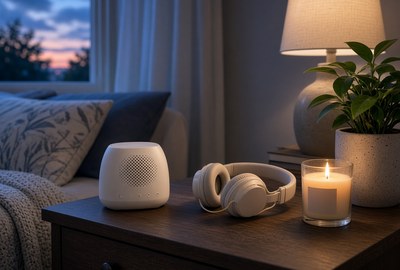
Tinnitus is the experience of hearing a sound, such as ringing, buzzing, hissing or humming, that doesn’t come from outside. It is very common, and while it can feel worrying at first, most people find it becomes much less noticeable over time. The encouraging news is that there are proven ways to reduce how much tinnitus bothers you, from cognitive behavioural therapy (CBT) and mindfulness to sound therapy, relaxation and better sleep. On this page you’ll find what tinnitus is, why it happens and the self-help approaches with the best backing. Pick what’s going on for you and we’ll show you where to start.
What’s going on for you?
For a loud moment.
- Step 1 · Add gentle sound
Sound enrichment
A fan, soft music or nature sounds.
- Step 2 · Breathe slowly
Calm the body
A longer out-breath helps you settle.
- Step 3 · Relax
Guided relaxation
Release tension from head to toe.
Not quite right? See every method for tinnitus
For tinnitus at night.
- Step 1 · Use bedside sound
Low background sound
Set just below your tinnitus.
- Step 2 · Wind down
A calm routine
Relaxation before bed.
- Step 3 · Learn more
Sleep guide
Practical tips for restful nights.
Not quite right? See every method for tinnitus
For worry and stress.
- Step 1 · Understand it
Learn how tinnitus works
Knowledge eases fear.
- Step 2 · Try CBT
Change your response
Reduces how much tinnitus bothers you.
- Step 3 · Try hypnosis
Deep relaxation
Calming suggestions and imagery.
Not quite right? See every method for tinnitus
For long-term habituation.
- Step 1 · Practise mindfulness
Notice without struggle
MBCT helped tinnitus severity.
- Step 2 · Check your hearing
Hearing test
Hearing aids can help.
- Step 3 · Live fully
Do what you enjoy
Attention naturally moves on.
Not quite right? See every method for tinnitus
Every method for tinnitus
Self-help practices
-
CBT
CBT may reduce the impact of tinnitus on quality of life. [1]
Everyday practice
-
Mindfulness-based cognitive therapy
MBCT reduced tinnitus severity, with benefits lasting six months. [2]
Everyday practice
-
Sound enrichment
Gentle background sound makes tinnitus less noticeable.
Everyday practice
-
Hearing care
Hearing aids are recommended for people with tinnitus and hearing loss. [3]
Everyday practice
Methods that pair well
-
Hypnosis
Deep relaxation, imagery and calming suggestions. Full guide
-
Relaxation
Releasing tension for calmer days and better sleep. Full guide
-
CBT (cognitive behavioural therapy)
Practical skills to change how you respond to tinnitus. Full guide
-
Mindfulness
Noticing sounds and sensations with less struggle. Full guide
More methods with their own hub and guide
-
Meditation
Quiet minutes to settle body and mind. Full guide
-
Breathwork
Slow, steady breathing for calm. Full guide
-
Yoga
Movement, breath and relaxation together. Full guide
-
Sound Healing
Calming sound and music. Full guide
-
NLP
Reframing thoughts and shifting focus. Full guide
Expert guidance
-
GP or family doctor
A check-up, ear examination and referral if needed.
Support option
-
Audiologist or ENT specialist
Hearing tests, hearing aids, sound therapy and tinnitus support.
Support option
Learn more
About tinnitus
What it is, why it happens and what helps. Contents:
- What is tinnitus?
- How common is tinnitus?
- What causes tinnitus?
- Tinnitus and the brain
- Habituation: the good news
- CBT for tinnitus
- Mindfulness
- Sound therapy
- Tinnitus retraining and counselling
- Types of tinnitus
- Hearing care
- Sleep
- Relaxation and hypnosis
- Stress and anxiety
- Protecting your hearing
- Everyday habits
- A simple 30-day plan
- How self-help methods fit in
- FAQs
What is tinnitus?
Tinnitus is hearing a sound that doesn’t come from the world around you. People describe it as ringing, buzzing, whistling, hissing, humming or clicking, in one or both ears or in the head. It can be constant or come and go. Tinnitus is a symptom rather than a disease in itself, and for most people it is not a sign of anything serious. Marc Fagelson’s TED-Ed video, in Videos, explains it clearly. You can explore related topics in our Health hub, including sleep and headaches and migraines.
How common is tinnitus?
A global review in JAMA Neurology found that about 14% of adults have tinnitus, rising to nearly a quarter of people over 65. Only around 2% have severe tinnitus. [4] The American Academy of Otolaryngology–Head and Neck Surgery guideline notes that tinnitus affects more than 50 million people in the US. [3] So if you have tinnitus, you are very far from alone, and support is available in the UK, the US, Canada, Australia, Europe, India and beyond.
What causes tinnitus?
Tinnitus is often linked to changes in hearing, such as age-related hearing loss or exposure to loud noise. Other causes include ear infections, a build-up of earwax, ear injuries, jaw or neck problems, some medicines and conditions such as Ménière’s disease. Stress and tiredness can make tinnitus seem louder. Sometimes no clear cause is found. If your tinnitus is in one ear only, beats in time with your heartbeat, came on suddenly or comes with hearing loss or dizziness, see your doctor promptly.
Tinnitus and the brain
Researchers think tinnitus often begins when the brain adjusts to reduced input from the ear by turning up its own activity, a bit like turning up the volume on a quiet radio and hearing static. How much tinnitus bothers you depends a lot on how the brain’s attention and emotional systems respond to it. Josef Rauschecker’s TEDx talk, Ringing in the Brain, in Videos, explores this. This is why approaches that work with attention, thoughts and stress can make such a difference.
Habituation: the good news
Habituation means the brain learns that a sound is not important and stops paying it so much attention, in the same way you stop noticing a ticking clock or a fridge humming. Many people find that over months, their tinnitus fades into the background and becomes much less bothersome, even if it’s still there. Everything on this page is designed to help that natural process along.
CBT for tinnitus
Cognitive behavioural therapy (CBT) helps you change the thoughts, feelings and habits that keep tinnitus in the spotlight. A Cochrane review of 28 studies with 2,733 people found that CBT may reduce the impact of tinnitus on quality of life. [1] The US tinnitus guideline recommends CBT for people with persistent, bothersome tinnitus, [3] and NICE in the UK also includes psychological therapies in its tinnitus guideline. [5] CBT for tinnitus usually includes learning about tinnitus, relaxation, changing unhelpful thoughts, shifting attention, improving sleep and gradually returning to activities you’ve been avoiding. It is available face to face, in groups and online. The ADAA video and Professor Brian Moore’s ten-step self-help guide are in Videos.
Mindfulness
Mindfulness teaches you to notice sounds, sensations and thoughts with curiosity and acceptance rather than struggle. In a randomised trial with 75 people with chronic tinnitus, mindfulness-based cognitive therapy (MBCT) and relaxation training both helped, and MBCT reduced tinnitus severity more, with benefits lasting six months. [2] Try sitting quietly and gently noticing all the sounds around you, including the tinnitus, without trying to change them. Tinnitus UK’s mindfulness session and Bruce Hubbard’s talk are in Videos.
Sound therapy
Sound therapy uses gentle background sound to make tinnitus less noticeable and help the brain habituate. You might use a fan, soft music, nature sounds, a sound app or a bedside sound generator. Set the volume just below the level of your tinnitus, so you can still hear both. The US guideline describes sound therapy as an option for persistent, bothersome tinnitus. [3] Many people find it especially helpful in quiet rooms and at night.
Tinnitus retraining and counselling
Many audiology services offer tinnitus counselling, sometimes as part of an approach called tinnitus retraining therapy. It combines clear information about how tinnitus works with gentle sound therapy, so the brain gradually learns to treat the sound as unimportant. Sessions usually cover what tinnitus is, why it can feel distressing, and practical ways to manage quiet rooms, sleep and stressful days. Doctor Cliff’s video on retraining your brain, in Videos, explains the idea. Many people say that simply understanding their tinnitus better brings real relief.
Types of tinnitus
Most tinnitus is “subjective”, meaning only you can hear it. It may be a steady tone, a hiss or a mix of sounds, and it often changes with tiredness, stress or background noise. Less commonly, tinnitus can sound like a rhythmic whooshing in time with your heartbeat, called pulsatile tinnitus. This type should always be checked by a doctor, because it can sometimes be linked to blood flow changes that can be treated. Some people with tinnitus also find everyday sounds uncomfortably loud, called hyperacusis, and an audiologist can help with this too.
Hearing care
Because tinnitus is often linked to hearing loss, a hearing test is a helpful step. If you have hearing loss, hearing aids can make everyday sounds clearer and tinnitus less noticeable, and the US guideline recommends a hearing aid evaluation for people with tinnitus and hearing loss. [3] Ask your doctor about a referral to an audiologist. Some hearing aids also include built-in sound therapy.
Sleep
Tinnitus can seem louder at night when everything is quiet. A gentle background sound, a regular bedtime, a cool and comfortable bedroom and a relaxing wind-down routine all help. If you wake up, try not to focus on the tinnitus; listen to calm music or practise slow breathing instead. Our sleep guide has more tips.
Relaxation and hypnosis
Relaxation calms the body and mind, which can help tinnitus feel less intrusive. In the MBCT trial above, relaxation training also helped people. [2] Progressive muscle relaxation, body scans, slow breathing and guided imagery are good places to start. Many people also enjoy hypnosis as a deeply relaxing practice that uses imagery and calming suggestions, such as turning the sound down like a dial or letting it blend into the background.
Stress and anxiety
Stress and tinnitus can feed each other: tinnitus can cause worry, and stress can make tinnitus seem louder. Breaking that cycle is one of the most helpful things you can do. Regular exercise, time outdoors, talking to others and calming practices all help. Our guides to anxiety, stress management and overthinking have more tools, and our inner peace guide offers gentle ways to feel calmer.
Protecting your hearing
Loud noise can damage hearing and make tinnitus worse. Use earplugs at concerts, in noisy workplaces and when using power tools, and keep headphone volume moderate, taking regular breaks. Avoid blocking your ears completely in everyday life, though, as total quiet can make tinnitus more noticeable.
Everyday habits
- Stay active, which helps with stress and sleep.
- Notice whether caffeine, alcohol or tiredness affect your tinnitus.
- Keep busy with activities you enjoy, which naturally shift attention.
- Join a tinnitus support group to share tips and encouragement.
- Don’t put cotton buds in your ears. If you think you have earwax, ask a pharmacist or doctor.
A simple 30-day plan
Week 1: Understand. Watch the explainer videos and book a check-up with your doctor.
Week 2: Add sound. Use gentle background sound in quiet rooms and at night.
Week 3: Calm. Practise ten minutes of mindfulness or relaxation each day.
Week 4: CBT skills. Work through a CBT self-help guide, or ask about a course.
How self-help methods fit in
CBT and mindfulness are among the best-supported ways to reduce how much tinnitus bothers you. Relaxation, hypnosis and meditation help you feel calmer, and gentle sound practices can soothe a quiet room. These work well alongside hearing care and support from your doctor or audiologist. You can see every method we cover in the full list above.
Frequently asked questions
Will my tinnitus go away?
For many people, tinnitus fades or becomes much less noticeable over time as the brain habituates to it.
Does CBT help tinnitus?
Yes. A Cochrane review found that CBT may reduce the impact of tinnitus on quality of life. [1]
Can mindfulness help tinnitus?
In a trial, mindfulness-based cognitive therapy reduced tinnitus severity, with benefits lasting six months. [2]
What is sound therapy?
Using gentle background sound, such as a fan or nature sounds, to make tinnitus less noticeable and support habituation.
Can hearing aids help tinnitus?
For people with hearing loss, hearing aids can make tinnitus less noticeable and are recommended in the US guideline. [3]
How common is tinnitus?
About 14% of adults have tinnitus, and only around 2% have severe tinnitus. [4]
Why is tinnitus louder at night?
Quiet surroundings make tinnitus more noticeable. Gentle background sound and relaxation can help.
The best videos on tinnitus
Hand-picked and checked one by one: TED-Ed, TEDx, Zero To Finals, ADAA, Tinnitus UK and specialist clinicians.
Understanding tinnitus
CBT for tinnitus
Mindfulness and meditation
Books on tinnitus
Free resources
Experts to follow
Get help
If tinnitus comes on suddenly, is in one ear or comes with hearing loss or dizziness, please see your doctor.
Find a therapist or counsellor
- US and Canada: Psychology Today (US) and (Canada) directories.
- UK: BACP therapist directory.
- Australia: APS Find a Psychologist, and Relationships Australia for couple and family services.
- Elsewhere, including Europe and India: ask your doctor or local health service for a referral, and check that anyone you see is registered or accredited where you live.
This hub is for information, not a substitute for medical or psychological care.
Sources
- Fuller et al. (2020), Cognitive behavioural therapy for tinnitus, Cochrane Database of Systematic Reviews 2020(1):CD012614
- McKenna et al. (2017), Mindfulness-based cognitive therapy as a treatment for chronic tinnitus: a randomized controlled trial, Psychotherapy and Psychosomatics 86(6):351-361
- Tunkel et al. (2014), Clinical practice guideline: tinnitus, Otolaryngology–Head and Neck Surgery 151(2 Suppl):S1-S40
- Jarach et al. (2022), Global prevalence and incidence of tinnitus: a systematic review and meta-analysis, JAMA Neurology 79(9):888-900
- NICE (2020), Tinnitus: assessment and management, guideline NG155
Written by Saj Ali. Last updated 3 November 2026. Spotted an error? Tell us and we will fix it.