
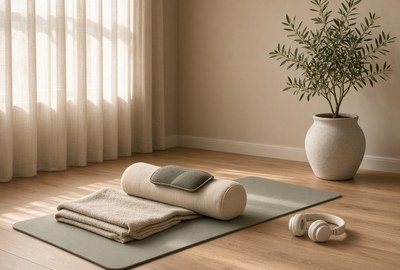
Non-sleep deep rest, or NSDR, is a simple way to rest your body and mind deeply while staying awake. You lie down, close your eyes and follow a guided voice that leads you through slow breathing and a gentle scan of your body. In ten to thirty minutes, many people feel refreshed, calmer and clearer, almost as if they had taken a nap. NSDR is a modern name for practices with deep roots, especially yoga nidra, the “yogic sleep” of India, which is now practised everywhere from yoga studios in Mumbai to offices in California. Pick what’s going on for you and we’ll show you where to start.
What’s going on for you?
For a short reset in the middle of the day.
- Step 1 · Find ten minutes
Lie down or recline
Somewhere comfortable where you won’t be disturbed. Headphones help.
- Step 2 · Press play
A 10-minute NSDR
Follow a short guided session. There are several in Videos.
- Step 3 · Ease back in
Take a moment
Stretch, open your eyes slowly and notice how you feel.
Not quite right? See every method for NSDR
For winding down and resting well at night.
- Step 1 · Wind down
Yoga nidra in bed
A guided yoga nidra is a lovely way to end the day.
- Step 2 · If you wake
Use NSDR to settle
A short session can help you drift back off.
- Step 3 · Build better nights
Sleep
More ways to fall asleep and stay asleep.
Not quite right? See every method for NSDR
For an afternoon lift and clearer thinking.
- Step 1 · Afternoon dip
Swap a coffee for NSDR
Many people use a 10 to 20 minute session after lunch.
- Step 2 · After learning
Rest to help it stick
Some people use NSDR after a study or practice session.
- Step 3 · Boost your energy
Energy and fatigue
How sleep, food and movement fit together.
Not quite right? See every method for NSDR
For a fuller yoga nidra practice.
- Step 1 · Learn the roots
Yoga nidra
The yogic tradition behind NSDR. There are introductions in Videos.
- Step 2 · Set an intention
Sankalpa
A short, positive statement you repeat during practice.
- Step 3 · Explore yoga
Yoga
Yoga nidra is part of the wider yoga tradition.
Not quite right? See every method for NSDR
Every method for NSDR
NSDR and yoga nidra
-
NSDR protocols
Short guided sessions of 10, 20 or 30 minutes, named and shared free by neuroscientist Andrew Huberman. [1]
Rest practice
-
Yoga nidra
The traditional practice of “yogic sleep”, with a body scan, breath awareness and an intention. In a 30-day study, 11 minutes a day lowered stress and improved sleep and well-being. [2]
Rest practice
-
iRest
Integrative Restoration, a modern form of yoga nidra developed by psychologist Richard Miller.
Rest practice
Related ways to rest deeply
-
Body scan
Moving your attention slowly through your body from head to toe.
Rest practice
-
Relaxation
Progressive muscle relaxation, deep breathing and guided imagery all increased feelings of relaxation in one study. [3] Full guide
-
Hypnosis
Self-hypnosis recordings use a similar deep, guided relaxation. Full guide
-
Power nap
A short nap of 10 to 20 minutes is another classic way to recharge.
Rest practice
Methods that pair well
-
Meditation
A short daily meditation improved attention, memory and mood in one eight-week study. [4] Full guide
-
Yoga
Yoga nidra is traditionally practised at the end of a yoga class. Full guide
-
Binaural Beats
Sound tracks that many people use to relax more deeply. Full guide
-
Mindfulness
Builds the steady, relaxed attention that NSDR uses. Full guide
More methods with their own hub and guide
-
Visualisation
Guided imagery appears in many yoga nidra scripts. Full guide
-
Sound Healing
Gongs and singing bowls create a deep, restful state. Full guide
-
Qi Gong
Slow movement and breath to settle the body. Full guide
-
Human Upgrade System
An approach to energy and performance that includes rest practices. Full guide
Teachers and classes
-
Yoga nidra teacher
Many yoga studios and online platforms offer live yoga nidra classes.
Support option
-
Your doctor
If you are often very tired, a doctor can help you find out why.
Support option
Learn more
About nsdr
What it is, why it happens and what helps. Contents:
- What NSDR is
- From yoga nidra to NSDR
- How NSDR works
- What the research shows
- What happens in a session
- How to try NSDR
- 10, 20 or 30 minutes?
- NSDR for sleep
- NSDR for energy and focus
- NSDR and learning
- Sankalpa: setting an intention
- Styles of yoga nidra
- Deep rest around the world
- Fitting NSDR into your day
- Apps, recordings and classes
- How self-help methods fit in
- FAQs
What NSDR is
NSDR stands for non-sleep deep rest. It is a guided practice that helps you move into a state of deep relaxation while staying awake. You usually lie on your back with your eyes closed and follow a voice that guides you to breathe slowly and to bring your attention to different parts of your body. Your body becomes very still and heavy, your breathing slows, and your mind becomes quiet but aware. The name was coined by Stanford neuroscientist Dr Andrew Huberman, who wanted a simple, practical term for a family of practices that includes yoga nidra and some forms of hypnosis. [1] The appeal is clear: you can do it almost anywhere, it is free, and many sessions take just ten minutes. You can explore related topics in our Health hub.
From yoga nidra to NSDR
Yoga nidra means “yogic sleep” in Sanskrit. Ideas about a state between waking and sleeping appear in ancient Indian texts, and in the 20th century Swami Satyananda Saraswati of the Bihar School of Yoga developed the structured practice that most people know today. A review of yoga nidra describes how it grew from these roots into a practice used in many settings around the world. [5] In the United States, psychologist Richard Miller created iRest, a form of yoga nidra that has been offered to military veterans and in hospitals and community programmes. Teachers such as Kamini Desai and Rod Stryker have shared their own approaches worldwide. Huberman’s NSDR keeps the core elements, slow breathing and a body scan, and leaves out some of the spiritual language, which many people find makes it easy to start.
How NSDR works
When you are busy or stressed, your nervous system leans towards “go” mode. NSDR guides you towards the opposite, a rest-and-restore state. Slow breathing, especially with a longer out-breath, helps your heart rate settle. Placing your attention on each part of your body in turn helps release tension you may not have noticed. And because the guiding voice gives your mind something gentle to follow, it becomes easier to let go of busy thoughts. The result is a deep, restful state that feels a little like the moment just before you fall asleep, except that you remain aware and can come back whenever you choose.
What the research shows
Research on yoga nidra is growing. In a brain imaging study in Denmark, people practising yoga nidra showed a large increase in dopamine release in a part of the brain linked with reward and motivation, alongside a pleasant, relaxed state. [6] Huberman often mentions this finding when he explains why people feel refreshed after NSDR. [1] In a 30-day online study in Germany, people who did an 11-minute yoga nidra practice every day had lower stress and better sleep quality and well-being than a waitlist group. [2] In a study in India of 41 people with chronic insomnia, yoga nidra improved sleep, and the improvements were comparable with those from a well-established talking therapy for insomnia. [7] Related relaxation practices have strong support too. A study comparing progressive muscle relaxation, deep breathing and guided imagery found that all three increased feelings of relaxation. [3]
What happens in a session
Every teacher has their own style, but most NSDR and yoga nidra sessions follow a similar pattern:
- Settling: you lie down, get comfortable and close your eyes.
- Breathing: a few slow breaths, often with a longer out-breath.
- Intention: in yoga nidra, you may silently repeat a short, positive statement called a sankalpa.
- Body scan: the guide names parts of your body one by one, and you simply notice each part.
- Sensations and images: some sessions invite you to notice feelings such as heaviness or warmth, or to picture calming images.
- Returning: you are guided gently back, ready to move on with your day or drift into sleep.
How to try NSDR
Starting is easy. Choose a time when you won’t be disturbed for ten to twenty minutes. Lie on your back on a bed, sofa or mat, with a pillow under your head and knees if you like, or recline in a comfortable chair. Cover yourself with a blanket, because your body can cool down as you relax. Put on headphones and press play on a guided session, such as one of the free Huberman NSDR recordings in Videos. [1] Simply follow the voice. If your mind wanders, that is completely normal: gently come back to the next instruction. If you fall asleep, that is fine too, especially at night. Afterwards, take a moment before getting up.
10, 20 or 30 minutes?
Huberman shares free NSDR protocols of about 10, 20 and 30 minutes. [1] A 10-minute session is a great way to start and fits easily into a lunch break. Twenty minutes gives you a deeper rest and suits an afternoon dip. Longer yoga nidra practices of 30 to 45 minutes are lovely at the weekend or in the evening. The German study used just 11 minutes a day, which suggests that a short, regular practice is enough to feel a difference. [2]
NSDR for sleep
Many people use yoga nidra in bed as the last thing they do at night, and it is a natural way to drift into sleep. It can also help if you wake in the night: rather than reaching for your phone, play a short session and let it guide you back down. The insomnia study found that yoga nidra improved sleep in people who had struggled for a long time. [7] Most adults do best with seven to nine hours of sleep a night, [8] and NSDR is a helpful partner to good sleep habits. Our sleep guide has many more ideas.
NSDR for energy and focus
One of the most popular uses of NSDR is as an afternoon reset. Many people feel a dip in energy after lunch, and a 10 to 20 minute session can leave you feeling refreshed and clear-headed without the grogginess some people get from a long nap. Others use NSDR after a hard workout, between meetings or before an evening event. Huberman describes it as a way to restore mental and physical energy, and the dopamine finding helps explain why many people come out of a session feeling motivated. [6] If energy is your main concern, our guide to energy and fatigue covers sleep, food and movement too.
NSDR and learning
Some people use NSDR after studying or practising a skill, such as a language, an instrument or a sport. Rest after learning gives your brain a quiet space to process what you have just done, and many students, musicians and athletes find a short session a pleasant way to round off a practice. Short, regular calm practices can support your thinking more broadly: in one study, people new to meditation who did a 13-minute guided meditation every day for eight weeks improved their attention, memory and mood. [4]
Sankalpa: setting an intention
A distinctive part of yoga nidra is the sankalpa, a short, positive statement of intention that you repeat silently at the beginning and end of the practice. It is phrased in the present tense, as if it is already true, for example “I am calm and at ease”, “I rest deeply” or “I am healthy and strong”. Teachers suggest choosing a sankalpa that feels meaningful to you and keeping it the same for weeks or months. Many people find that this simple ritual gives their practice a sense of purpose. Huberman’s NSDR sessions usually leave this out, so if you are drawn to it, try a traditional yoga nidra recording.
Styles of yoga nidra
There are several popular approaches, and it is worth trying a few to see which voice and style you like:
- Satyananda yoga nidra: the classic structured practice from the Bihar School of Yoga in India.
- iRest: Richard Miller’s Integrative Restoration, widely used in the United States.
- I AM Yoga Nidra: the approach taught by Kamini Desai and the Amrit Yoga Institute.
- Tantric and Himalayan approaches: such as those taught by Rod Stryker.
- NSDR: Huberman’s short, secular protocols.
Deep rest around the world
The idea of resting deeply while awake appears in many cultures. In India, yoga nidra and savasana, the final resting pose of a yoga class, are central parts of practice. In China and Japan, quiet sitting and standing practices in qigong and Zen cultivate deep stillness. Across Europe, autogenic training, developed in Germany in the 1930s, uses gentle phrases about heaviness and warmth to relax the body. In Spain and other Mediterranean countries, the siesta is a long-standing tradition of afternoon rest. Today, yoga nidra and NSDR recordings are listened to in every time zone, in many languages, by students, parents, athletes and business leaders alike.
Fitting NSDR into your day
Here are some simple ways to make NSDR a habit:
- After lunch: a 10-minute session instead of an afternoon coffee.
- After exercise: 10 to 20 minutes lying down to recover.
- After studying or practice: a short session to rest your brain.
- At bedtime: a longer yoga nidra to drift into sleep.
- If you wake at night: a short session to settle back down.
Link it to something you already do, and keep your favourite recording saved so it is always one tap away.
Apps, recordings and classes
Many NSDR and yoga nidra recordings are free. Huberman’s NSDR page links to free sessions, [1] and YouTube has many guided practices in different voices and lengths, including those in Videos. Meditation and sleep apps usually include body scans and yoga nidra sessions. iRest offers recordings and teacher listings, and yoga studios and online platforms such as Yoga International offer classes. If you prefer to learn in person, many yoga studios now hold regular yoga nidra evenings, which can be a lovely, restful way to end the week.
How self-help methods fit in
NSDR sits comfortably alongside many self-help methods. Meditation and mindfulness build the same steady, relaxed attention. Yoga is the home of yoga nidra. Relaxation techniques and self-hypnosis use similar deep, guided rest. Binaural beats and sound healing are popular partners for deep rest. If stress or tiredness is what brings you here, our guides to stress management, burnout and overthinking have more ideas. Directories for several countries are in Get help & sources.
Frequently asked questions
What is NSDR?
Non-sleep deep rest: a guided practice of slow breathing and a body scan that helps you rest deeply while staying awake. The term was coined by Dr Andrew Huberman. [1]
Is NSDR the same as yoga nidra?
NSDR is a modern, secular name for a family of practices that includes yoga nidra. Yoga nidra often adds an intention, called a sankalpa, and more traditional elements.
How long should an NSDR session be?
Ten minutes is a great start. Free protocols come in about 10, 20 and 30 minute versions. [1] One study used just 11 minutes a day. [2]
Can NSDR replace sleep?
No. It is a way to rest and recharge during the day, alongside a good night’s sleep. Most adults do best with seven to nine hours a night. [8]
Does yoga nidra help you sleep?
Studies have found it improved sleep quality, including in people with chronic insomnia. [7]
When is the best time to do NSDR?
Many people use it after lunch, after exercise, after studying, at bedtime or if they wake in the night.
What if I fall asleep during NSDR?
That is fine, especially at night. With practice, many people find they can stay in the restful, aware state between waking and sleep.
The best videos on nsdr
Hand-picked and checked one by one: a neuroscientist, leading yoga nidra teachers and Yoga International, with sessions of different lengths.
What NSDR and yoga nidra are
10-minute sessions
Longer practices
Books on nsdr
Free resources
Experts to follow
Get help
If you often feel very tired even after good rest, a doctor can help you find out why.
Find a therapist or counsellor
- US and Canada: Psychology Today (US) and (Canada) directories.
- UK: BACP therapist directory.
- Australia: APS Find a Psychologist, and Relationships Australia for couple and family services.
- Elsewhere, including Europe and India: ask your doctor or local health service for a referral, and check that anyone you see is registered or accredited where you live.
This hub is for information, not a substitute for medical or psychological care.
Sources
- Huberman Lab, Dr Andrew Huberman’s guide to NSDR
- Moszeik, von Oertzen & Renner (2022), Effectiveness of a short Yoga Nidra meditation on stress, sleep, and well-being in a large and diverse sample, Current Psychology 41:5272-5286
- Toussaint et al. (2021), Effectiveness of progressive muscle relaxation, deep breathing, and guided imagery in promoting psychological and physiological states of relaxation, Evidence-Based Complementary and Alternative Medicine 2021:5924040
- Basso et al. (2019), Brief, daily meditation enhances attention, memory, mood, and emotional regulation in non-experienced meditators, Behavioural Brain Research 356:208-220
- Pandi-Perumal et al. (2022), The origin and clinical relevance of Yoga Nidra, Sleep and Vigilance 6:61-84
- Kjaer et al. (2002), Increased dopamine tone during meditation-induced change of consciousness, Cognitive Brain Research 13(2):255-259
- Datta et al. (2021), Yoga nidra practice shows improvement in sleep in patients with chronic insomnia: a randomized controlled trial, National Medical Journal of India 34(3):143-150
- Hirshkowitz et al. (2015), National Sleep Foundation’s sleep time duration recommendations: methodology and results summary, Sleep Health 1(1):40-43
Written by Saj Ali. Last updated 31 October 2026. Spotted an error? Tell us and we will fix it.