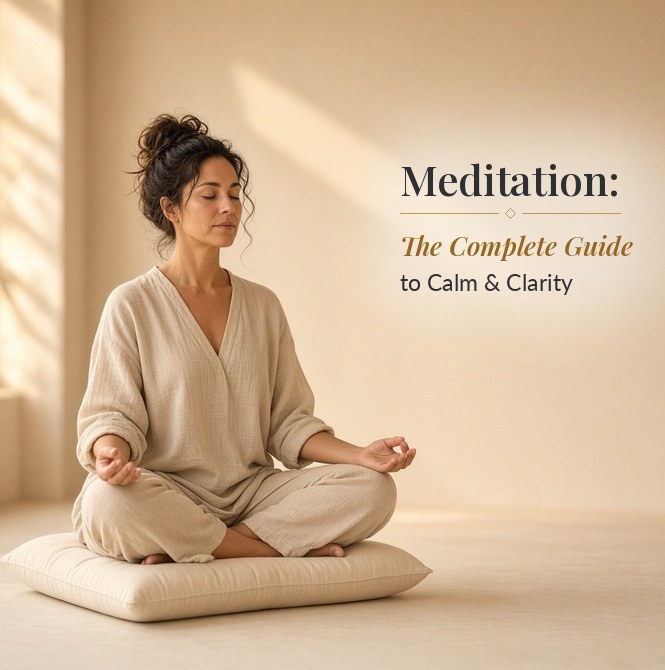
Meditation is a family of mental training practices that use focused attention, open awareness or deliberate kindness to steady the mind and change how you relate to thoughts and feelings. Rooted in Hindu, Buddhist and other contemplative traditions, it has good evidence for modest benefits for stress, anxiety, depression relapse and pain.
Last updated: 23 October 2026
Reading time: about 40 minutes
How we wrote this guide
Every health claim below links to the original study, its DOI or an official guideline, and we rely on meta-analyses and large trials rather than single small studies. We say plainly how strong the evidence is, where meditation has been oversold, and what can go wrong. We checked every video, podcast, book, app, course and account link in October 2026.
Quick answer: what is meditation and does it work?
- Meditation is attention training. You choose something to rest your attention on, such as the breath, a word, the body or a kind wish, notice when the mind wanders, and gently come back. That noticing and returning is the practice.
- The benefits are real but modest. A major review of 47 trials found moderate evidence that meditation programmes ease anxiety, depression and pain, with effects similar in size to those of antidepressants in primary care, but no better than other active treatments such as exercise or therapy (Goyal et al., 2014).
- The strongest single finding is for recurrent depression. Mindfulness-based cognitive therapy (MBCT) cuts the risk of relapse by about a third, and NICE recommends it in the UK (Kuyken et al., 2016; NICE NG222).
- It is not risk-free. In one careful study, 6–14% of people on mindfulness courses had lasting negative effects, such as anxiety, intrusive memories or feeling detached (Britton et al., 2021). Start gently, especially if you have a history of trauma or psychosis.
- Start small. Ten minutes a day of a simple breath or guided practice, kept up for eight weeks, is a sensible first goal. The type matters less than finding one you will actually do.
Contents
- What is meditation?
- A short history of meditation
- The main types of meditation
- Posture, timing and where to meditate
- How to start meditating: 10 steps
- Building a meditation habit
- Common obstacles and what to do about them
- The benefits of meditation: what the evidence says
- Risks and adverse effects
- Key meditation teachers
- Apps, books, courses and retreats
- Watch, listen and follow
- Frequently asked questions
- Key takeaways
- Sources
What Is Meditation?
Meditation is a way of training the mind, in the same way that exercise trains the body. Most forms ask you to do something very simple with your attention, such as following the breath, repeating a word or sensing the body, and to notice, without fuss, each time your mind drifts away. Over time this builds steadier attention and a different relationship with your thoughts: you learn that you can watch a worry or a craving without having to follow it.
There is no single agreed definition, because “meditation” covers hundreds of practices from many cultures. Researchers have tried to sort them by what the mind is actually doing. One influential scheme divides them into focused attention (holding attention on one object) and open monitoring (noticing whatever arises, moment to moment) (Lutz et al., 2008). A later framework groups practices into three families: attentional (training focus and awareness), constructive (cultivating qualities such as kindness and compassion) and deconstructive (looking closely at how thoughts, feelings and the sense of self are put together) (Dahl et al., 2015). A classification built from experienced practitioners’ ratings of many techniques found a similar pattern, with body-centred and movement-based practices as further groups (Matko & Sedlmeier, 2019).
Why bother? One reason is that our minds wander a great deal, and wandering is often unpleasant. In a study that used phone prompts to sample people’s thoughts through the day, minds were wandering 46.9% of the time, and people were less happy when their minds wandered than when they were focused on what they were doing (Killingsworth & Gilbert, 2010). Meditation practises the skill of noticing that drift and choosing where to put your attention.
Meditation is not the same as relaxation, although it is often relaxing. It does not require you to empty your mind, sit cross-legged, chant, or hold any religious beliefs. Many people practise it in a completely secular way, and others as part of Buddhist, Hindu, Christian, Jewish, Muslim or other spiritual traditions.
▶ All it takes is 10 mindful minutes – Andy Puddicombe, TED (YouTube). The Headspace co-founder and former Buddhist monk explains, with juggling balls, why a few minutes of doing nothing each day can change how you feel.
Meditation at a Glance
| What it is | Training attention and awareness, often by resting on an anchor such as the breath |
| Where it comes from | Ancient Indian, Buddhist, Chinese and other contemplative traditions; secular programmes since the 1970s |
| Main types | Focused attention, open monitoring, loving-kindness, body scan, mantra, Zen, vipassana, walking, visualisation, yoga nidra, guided |
| Best-supported uses | Preventing depression relapse (MBCT), anxiety, stress, chronic pain |
| Typical starting dose | 10–20 minutes a day; many programmes run for 8 weeks |
| Cost | Free to low cost; apps and courses vary |
| Main risks | Anxiety, low mood, re-experiencing trauma, feeling detached; more likely with intensive practice |
A Short History of Meditation
Meditation has appeared, in different forms, in most of the world’s religious and philosophical traditions. Here are the main milestones.
- Ancient India. Early Hindu texts, the Upanishads, describe dhyana (meditative absorption) and the repetition of sacred sounds such as Om. In Patanjali’s Yoga Sutras, dhyana is the seventh of the eight limbs of yoga.
- The Buddha (around the 5th century BCE). Buddhist teaching set out detailed methods for calm (samatha) and insight (vipassana), including mindfulness of breathing and the body, and the “four immeasurables” of loving-kindness, compassion, sympathetic joy and equanimity.
- China and Japan. Daoist traditions developed breathing and stillness practices. Buddhism in China gave rise to Chan, which became Zen in Japan. In the 13th century the Japanese teacher Dōgen taught zazen (“seated meditation”), and his Sōtō Zen school is still widespread.
- Contemplative practice in other religions. Christian monks developed contemplative prayer and the repeated “Jesus Prayer”; Sufi Muslims practise dhikr (repeated remembrance of God); Jewish mystics developed their own meditative traditions.
- Meditation comes West (1950s–1970s). Maharishi Mahesh Yogi began teaching Transcendental Meditation (TM) internationally in the late 1950s, and it became famous when the Beatles visited him in India in 1968. S. N. Goenka began teaching ten-day vipassana courses in 1969. In 1975 Jack Kornfield, Joseph Goldstein and Sharon Salzberg co-founded the Insight Meditation Society in Massachusetts.
- Science and medicine (from 1979). Jon Kabat-Zinn created mindfulness-based stress reduction (MBSR) at the University of Massachusetts Medical School, and his first study tested it with chronic pain patients (Kabat-Zinn, 1982). Zindel Segal, Mark Williams and John Teasdale later combined mindfulness with cognitive therapy to create MBCT, which halved relapse rates in people with three or more past episodes of depression in its first trial (Teasdale et al., 2000).
- The app era (2010s onwards). Headspace (launched 2010) and Calm (2012) brought guided meditation to phones, and free apps such as Insight Timer now host hundreds of thousands of recordings.
▶ Mindfulness Stress Reduction and Healing – Jon Kabat-Zinn, Google TechTalks (YouTube). The creator of MBSR explains how a programme rooted in Buddhist meditation was adapted for hospital patients, and what mindfulness means in everyday life.
Why the history matters for you
Modern secular programmes borrow from living religious traditions. You don’t need to adopt any beliefs to benefit, but knowing where a practice comes from helps you choose well, and helps you spot marketing that claims a technique is “ancient” or “secret” when it isn’t.
The Main Types of Meditation
There are many ways to meditate. Most fit into the families above, and many teachers combine them. Here are the types you are most likely to meet.
Focused Attention (Concentration)
You rest your attention on one thing, usually the feeling of the breath, and bring it back each time it wanders. Counting breaths from one to ten is a common beginner’s method. In Buddhism this is called samatha (calm). It trains concentration and is the foundation for most other practices (Lutz et al., 2008).
Open Monitoring
Instead of one object, you notice whatever arises (sounds, sensations, thoughts and emotions), without holding on to anything or pushing it away. It is sometimes called “choiceless awareness” and usually comes after some focused practice. A review comparing types found that focused attention practices tended to lower cortisol, open monitoring tended to lower heart rate, and all types lowered systolic blood pressure (Pascoe et al., 2017).
Mindfulness Meditation
Mindfulness combines focused attention and open monitoring with an attitude of curiosity and non-judgement. It is the basis of MBSR and MBCT, which teach practices such as the body scan, sitting meditation, mindful movement and the short “three-step breathing space” over eight weekly classes. Because it is the most researched form, most of the evidence in this guide is about mindfulness. A separate full guide to mindfulness is coming soon.
Loving-Kindness (Metta) and Compassion
You silently repeat warm wishes such as “May I be safe. May I be happy. May I be healthy. May I live with ease.”, first for yourself, then for someone you love, a neutral person, someone difficult and finally all beings. Compassion practice focuses on wishing others free from suffering. A meta-analysis found kindness-based meditation moderately improved depression, compassion and positive emotions, although it can feel uncomfortable at first, especially when directing kindness to yourself (Galante et al., 2014; Hofmann et al., 2011).
▶ A 10-minute loving-kindness meditation – Sharon Salzberg, Tricycle (YouTube). One of the best-known Western metta teachers leads a short, gentle practice you can follow along with.
Body Scan
Usually lying down, you move your attention slowly through the body from the toes to the head, noticing sensations without trying to change them. It is a core MBSR practice and many people find it helps them unwind before sleep. On its own, though, the evidence is thinner than for full programmes: a meta-analysis found only a small effect of body scan practice alone on mindfulness, with low-quality studies (Gan et al., 2022).
Mantra Meditation, Including TM and Vedic Meditation
You silently repeat a word or sound, either a sacred word or a neutral one. Transcendental Meditation (TM) is the best-known form: a certified teacher gives you a personal mantra over a short paid course, and you practise for 20 minutes twice a day, sitting comfortably with eyes closed. Vedic Meditation is a closely related mantra practice from the same Indian tradition, taught by independent teachers. Both describe themselves as effortless, rather than as concentration. TM has some of the better blood pressure evidence of any meditation (see below), and a meta-analysis of 16 trials found TM reduced trait anxiety more than usual care, although its authors, like those of many TM studies, are linked to the TM organisation (Orme-Johnson & Barnes, 2014). A separate full guide to Vedic Meditation is coming soon.
Zen Meditation (Zazen)
In Zen, you sit very still, usually on a cushion facing a wall, with eyes half open and hands in a particular position (the “cosmic mudra”). Beginners often count or follow breaths. In the Sōtō school the main practice is shikantaza, “just sitting”, a kind of open awareness. In the Rinzai school, students also work with koans, puzzling questions such as “What is the sound of one hand?”. If you’re curious about Zen-inspired dialogue methods, see our guide to Big Mind.
Vipassana (Insight Meditation)
Vipassana means “seeing clearly”. You first steady the mind with the breath, then observe sensations, thoughts and feelings closely, to see that they keep changing. It is taught in two main ways in the West: the “insight meditation” approach of teachers such as Jack Kornfield, and the ten-day silent residential courses in the tradition of S. N. Goenka, which are run on donations at centres worldwide. The research is limited and mostly low quality (Chiesa, 2010), and intensive silent retreats are where difficult experiences are most often reported (see Risks).
Walking Meditation
You walk slowly, often back and forth along a short path, paying attention to the lifting, moving and placing of each foot. Thich Nhat Hanh taught a gentler, everyday form, coordinating steps with the breath. Walking practice suits people who find sitting uncomfortable or who get sleepy, and a small trial in older adults who had fallen found it improved balance about as well as standard balance training (Phoobangkerdphol et al., 2022).
Visualisation
You hold a mental image, such as a calm place, light filling the body or a deity in some Tibetan Buddhist practices, or rehearse a future event in your imagination. It overlaps with guided imagery and with the mental rehearsal used in sport. See our complete guide to visualisation and the visualisation hub.
Yoga Nidra
Yoga nidra (“yogic sleep”) is a guided practice done lying down. A teacher leads you through a body rotation, breath awareness, contrasting sensations and imagery, often with a personal intention (sankalpa). Its modern form was developed by Swami Satyananda Saraswati in the 20th century. It is popular for rest and sleep, though high-quality trials are few.
Guided Meditation
Guided meditation simply means a teacher’s voice talks you through a practice, live or recorded. Nearly any type above can be guided, which makes it the easiest way to start. Apps are mostly guided meditations. A meta-analysis of online programmes found guided ones worked better than unguided ones (Spijkerman et al., 2016).
Meditation Types Compared
| Type | Family | What you do | Good for | Typical session | Evidence |
|---|---|---|---|---|---|
| Focused attention | Attentional | Rest on the breath or one object, return when you wander | Concentration, beginners | 5–20 min | Moderate, as part of programmes |
| Open monitoring | Attentional | Notice whatever arises without holding on | Insight into thoughts and reactions | 10–30 min | Moderate, as part of programmes |
| Mindfulness (MBSR/MBCT) | Attentional | Breath, body scan, movement, open awareness | Stress, anxiety, depression relapse, pain | 8 weeks; 20–45 min a day | Strongest |
| Loving-kindness and compassion | Constructive | Repeat kind wishes for yourself and others | Self-criticism, low mood, relationships | 10–20 min | Moderate, low-quality trials |
| Body scan | Attentional | Move attention through the body | Relaxation, sleep, body awareness | 10–45 min | Low on its own |
| Mantra (TM, Vedic) | Attentional | Silently repeat a sound | Stress, blood pressure | 20 min twice a day | Moderate for blood pressure |
| Zen (zazen) | Attentional and deconstructive | Sit still with posture and breath; “just sitting” | Discipline, insight | 25–40 min | Limited |
| Vipassana | Deconstructive | Observe changing sensations closely | Insight, equanimity | 30–60 min; 10-day retreats | Limited, mostly low quality |
| Walking | Attentional | Slow, attentive walking | Restlessness, sleepiness, balance | 10–30 min | Limited |
| Visualisation | Constructive | Hold or rehearse a mental image | Calm, performance, motivation | 5–20 min | Varies by use |
| Yoga nidra | Mixed | Guided relaxation lying down | Rest, sleep | 20–45 min | Limited |
| Guided | Any | Follow a teacher’s voice | Beginners, consistency | 3–30 min | Guided online programmes beat unguided |
Posture, Timing and Where to Meditate
Posture. The aim is to be upright, stable and relaxed, so you stay alert without straining. You can:
- Sit on a chair with both feet flat on the floor, your back away from the backrest if you can, and hands resting on your thighs. This is completely fine and many teachers recommend it for beginners.
- Sit on a cushion or stool on the floor, cross-legged, kneeling or in a Burmese position (both shins on the floor, one in front of the other). Raising your hips above your knees takes strain off the back.
- Lie down for the body scan or yoga nidra, or if you have pain. You are more likely to fall asleep, which is fine if sleep is your goal.
- Walk or stand if sitting is uncomfortable.
Let your eyes close, or rest them half open with a soft gaze on the floor a metre or so ahead. Rest your hands wherever is comfortable. There is no need to force your legs into a full lotus position; knee injuries are a known risk of pushing too hard.
How long? Start with 5–10 minutes a day. Standard eight-week programmes such as MBSR ask for around 45 minutes of home practice a day, but research on apps and online programmes shows that shorter daily practice still helps (Gál et al., 2021). Consistency matters more than length.
When? Morning works well for many people, before the day gets busy and before checking your phone. A session after work can help you switch off. Avoid meditating straight after a heavy meal (you will feel sleepy) and avoid driving or operating machinery while listening to relaxation or sleep tracks.
Where? Choose a quiet spot where you won’t be disturbed, with your phone on silent. A regular place helps build the habit. But you can meditate anywhere: on a train, on a park bench or at your desk.
How to Start Meditating: 10 Steps
This simple breath-awareness practice is a good first meditation. It takes about 10 minutes and you need nothing except a timer.
- Choose a time and place. Pick a quiet spot and a regular time of day, such as straight after your morning coffee, so meditation becomes part of your routine.
- Set a timer. Start with 10 minutes, or 5 if that feels like a lot. Use a gentle alarm, or a free meditation timer app, so you don’t need to watch the clock.
- Sit comfortably and upright. Use a chair or cushion, feet grounded, back tall but not rigid, hands resting on your legs.
- Close your eyes or lower your gaze. Let your face, jaw and shoulders soften.
- Take a few deeper breaths, then let the breath be natural. Breathe in through your nose and let the out-breath be slow, two or three times, then stop controlling it.
- Choose your anchor. Feel where the breath is clearest, perhaps at the nostrils, chest or belly. Rest your attention there and feel each in-breath and out-breath.
- Notice when your mind wanders. It will, often within seconds. Thoughts, plans, memories and itches will pull you away. This is normal and not a sign of failure.
- Gently come back. When you notice you have drifted, silently note “thinking” if you like, and bring your attention back to the breath without criticising yourself. Each return is like one repetition at the gym.
- Finish slowly. When the timer sounds, widen your attention to your whole body and the room, notice how you feel, and open your eyes.
- Keep a short log and repeat daily. Note the date, how long you sat and one word about how it went. Aim for daily practice for eight weeks before judging whether it helps.
▶ Breathing Meditation – UCLA Health (YouTube). A short, free guided breath meditation from UCLA’s Mindful Awareness Research Center, ideal as a first practice.
Tip: try more than one type
If breath meditation makes you anxious or bored, try a body scan, walking meditation or loving-kindness instead. Some people with asthma, panic or trauma find focusing on the breath uncomfortable, and an external anchor, such as sounds or the feeling of your feet on the floor, can work better.
Building a Meditation Habit
Most people find starting meditation easier than keeping it going. These habit-building strategies help.
- Tie it to an existing habit. “After I brush my teeth, I sit for five minutes” works better than “I’ll meditate sometime today”.
- Make it small enough to be easy. On busy days, one minute of mindful breathing keeps the habit alive.
- Use guidance and structure. A course, app programme or eight-week class gives you a plan, and guided programmes tend to work better than going it alone (Spijkerman et al., 2016).
- Practise with others. Local groups, online sits and courses add accountability and let you ask questions.
- Bring it into daily life. Take three mindful breaths before opening email, eat the first few mouthfuls of a meal with full attention, or notice your feet when you walk to the station.
- Drop the scorecard. Some sessions will feel calm, many won’t. Judge the practice over weeks, not by individual sittings.
- Expect lapses. If you miss a few days, simply start again. Streaks are motivating until they’re broken; be kind to yourself rather than giving up.
Common Obstacles and What to Do About Them
“I can’t stop thinking.”
Nobody can. The goal is not an empty mind but noticing thoughts and coming back. A session full of wandering and returning is a good session.
- Restlessness and boredom. Shorten sessions, try walking meditation, or use a more engaging guided practice. Restlessness often eases after the first few minutes.
- Sleepiness. Sit more upright, open your eyes, practise at a different time of day, or meditate standing.
- Physical discomfort. Use a chair, more cushions or lie down. You can move mindfully if you need to. Sharp pain is a signal to change position.
- Doubt (“Am I doing it right?”). If you are noticing and returning, you are doing it right. A teacher or class can answer specific questions.
- Strong emotions. Sadness, irritation or old memories can surface. Notice them, name them gently (“sadness is here”) and come back to your anchor. Open your eyes and ground yourself if feelings become overwhelming, and see Risks below.
- No time. Three minutes counts. Many apps have short practices designed for busy days.
▶ Training the Monkey Mind – Headspace (YouTube). A short animation on what to do with a busy, wandering mind.
The Benefits of Meditation: What the Evidence Says
Meditation, and especially mindfulness, is one of the most studied mind-body practices, with hundreds of randomised trials. But many trials are small, compare meditation with doing nothing, and can’t be blinded. Researchers have warned that public enthusiasm has outrun the science (Van Dam et al., 2018). Here is a balanced summary.
Stress, Anxiety and Depression
The landmark review for the US Agency for Healthcare Research and Quality analysed 47 trials with 3,515 participants. It found moderate evidence that mindfulness programmes improve anxiety, depression and pain over eight weeks, with small-to-moderate effect sizes (about 0.3), and low evidence for stress and mental health-related quality of life. There was low or insufficient evidence for positive mood, attention, sleep, eating habits and weight, and meditation was no better than active treatments such as exercise, drugs or therapy (Goyal et al., 2014).
Other large reviews agree. In healthy people, MBSR has a large effect on stress and moderate effects on anxiety and depression (Khoury et al., 2015). Across 136 trials in non-clinical settings with more than 11,000 people, mindfulness programmes reduced anxiety, depression and distress compared with doing nothing, but were generally no better than other active wellbeing programmes (Galante et al., 2021). Earlier meta-analyses found similar moderate effects (Hofmann et al., 2010; Khoury et al., 2013; Sedlmeier et al., 2012).
For diagnosed mental health problems, mindfulness-based programmes did better than no treatment and about as well as established treatments such as CBT, with the most consistent evidence for depression, pain, smoking and addiction (Goldberg et al., 2018). In a 2022 trial with 208 adults with anxiety disorders, eight weeks of MBSR worked as well as the antidepressant escitalopram (Hoge et al., 2023).
Preventing Depression Relapse (MBCT)
This is where the evidence is strongest. An analysis pooling individual data from 1,258 patients in nine trials found MBCT reduced the risk of depressive relapse over 60 weeks by 31% compared with people who didn’t receive it, and by 21% compared with other active treatments, including antidepressants. People with more remaining symptoms benefited most (Kuyken et al., 2016).
In the UK, NICE’s guideline on depression in adults lists group mindfulness and meditation as a treatment option for less severe depression, and recommends considering MBCT (or group CBT) to prevent relapse in people who are well again and want to stop or not take antidepressants (NICE NG222). Ask your doctor, or in England your NHS Talking Therapies service, about MBCT.
Chronic Pain
A meta-analysis of 38 trials found low-quality evidence that mindfulness meditation slightly reduces pain, with clearer gains in depression and quality of life (Hilton et al., 2017). In a well-run trial with 342 adults with chronic low back pain, 61% of the MBSR group had meaningful improvements in function after 26 weeks, similar to CBT (58%) and better than usual care (44%) (Cherkin et al., 2016).
Sleep
A meta-analysis of 18 trials found mindfulness meditation moderately improved sleep quality compared with non-specific controls, but not compared with established sleep treatments (Rusch et al., 2019). In older adults with sleep problems, a six-week mindful awareness programme improved sleep quality more than sleep hygiene education (Black et al., 2015). For long-term insomnia, CBT for insomnia (CBT-I) remains the first-line treatment.
Blood Pressure and Heart Health
The American Heart Association reviewed alternative ways to lower blood pressure in 2013. It concluded that TM “may be considered” in clinical practice (a weak recommendation based on limited evidence), while other meditation techniques were not recommended because there was too little evidence (Brook et al., 2013). A later meta-analysis of 12 TM studies found average falls of about 4 mmHg systolic and 2 mmHg diastolic, with a high risk of bias in some studies (Bai et al., 2015). Meditation can complement but not replace medication, exercise and diet.
Attention, the Brain and Healthy Ageing
Meditation changes brain activity in regions linked to attention and emotion regulation (Tang et al., 2015). Early studies suggested that long-term meditators have differences in brain structure, with medium-sized effects across eight regions, but these studies were small and may be affected by publication bias (Fox et al., 2014). A larger, carefully controlled study of 218 people found no structural brain changes after eight weeks of MBSR (Kral et al., 2022). Headlines about meditation “growing your brain” are ahead of the evidence.
▶ How meditation can reshape our brains – Sara Lazar, TEDxCambridge (YouTube). The Harvard neuroscientist describes her early brain-imaging studies of meditators. Note that later, larger studies have not confirmed structural changes after short courses.
Apps, Online Courses and Schools
Meditation apps produce small-to-moderate improvements in stress, anxiety and depression in trials (Gál et al., 2021), and online programmes help too, especially guided ones (Spijkerman et al., 2016). But meditation is not a magic fix for everyone. In MYRIAD, a large UK trial in 84 secondary schools with more than 8,000 pupils, mindfulness lessons were no better than usual social and emotional teaching at improving mental health a year later (Kuyken et al., 2022).
Why Might Meditation Work?
Researchers think several processes are involved: better control of attention, greater awareness of the body, better regulation of emotions, and a change in how people relate to thoughts, seeing them as passing events rather than facts (Tang et al., 2015; Creswell, 2017; Wielgosz et al., 2019). In MBCT, learning to step out of repetitive negative thinking appears to be central to preventing relapse.
Evidence at a Glance
| Use | Evidence strength | What we can say |
|---|---|---|
| Preventing depression relapse (MBCT) | Moderate to strong | About a third lower relapse risk; recommended by NICE |
| Anxiety | Moderate | Small-to-moderate benefits; MBSR matched escitalopram in one trial |
| Depressive symptoms | Moderate | Small-to-moderate benefits; similar to other active treatments |
| Stress and distress (healthy adults) | Moderate | Benefits vs doing nothing; not clearly better than other wellbeing programmes |
| Chronic pain | Low to moderate | Small reduction in pain; better function and mood |
| Sleep quality | Low to moderate | Helps vs non-specific controls; CBT-I is first-line for insomnia |
| Blood pressure | Low to moderate | TM about 4/2 mmHg lower on average; weak AHA recommendation |
| Addiction and smoking | Low to moderate | Promising, mixed results |
| Attention and memory | Low | Inconsistent findings |
| School-based mindfulness for all pupils | Moderate (no benefit) | No better than usual teaching in MYRIAD |
| Changing brain structure | Low / contested | Not confirmed in larger controlled trials |
| Curing serious illness, “raising your vibration” | Not supported | No good evidence |
Risks and Adverse Effects
Meditation is usually described as harmless, but it can have side effects, and these are under-reported in trials. Knowing about them helps you practise safely.
- How common are problems? A systematic review of 83 studies found an average of 8.3% of participants had an adverse event, from 3.7% in experimental studies up to 33% in observational ones. The most common were anxiety, depression and unusual thoughts or perceptions, and they sometimes occurred in people with no history of mental health problems (Farias et al., 2020).
- In ordinary mindfulness courses. Psychologist Willoughby Britton and colleagues interviewed participants in standard eight-week courses. Most had some side effect, many mild or passing, but 6–14% had lasting negative effects, often involving signs of hyperarousal (anxiety, poor sleep) or dissociation (feeling detached from yourself or the world). The rates were similar to those for other psychological therapies (Britton et al., 2021).
- Among regular meditators. In a survey of 1,232 people who meditated regularly, 25.6% had had a particularly unpleasant meditation-related experience. These were more likely in people prone to repetitive negative thinking, those who practised only deconstructive types such as vipassana or koan practice, and those who had been on retreat (Schlosser et al., 2019).
- What can happen? A detailed study of Western Buddhist meditators documented 59 types of challenging experience, including fear, panic, flashbacks, changes in the sense of self, perceptual changes, involuntary movements and sleep problems. Some lasted months or years (Lindahl et al., 2017).
▶ The Hidden Risks of Meditation – Willoughby Britton, The Tim Ferriss Show (YouTube). The Brown University researcher who has done most to document meditation-related difficulties explains what can go wrong and why.
Who Should Take Extra Care?
- People with trauma or PTSD. Turning inward can bring up traumatic memories. Trauma-sensitive approaches let you keep your eyes open, use external anchors, move, or stop at any time. David Treleaven’s book Trauma-Sensitive Mindfulness is a good guide.
- People with a history of psychosis, bipolar disorder or severe depression. Intensive meditation, especially long silent retreats, has been linked to episodes in vulnerable people. Talk to your doctor before a retreat, and choose courses that screen participants.
- People in an acute crisis. Meditation is not a substitute for urgent help. If you are struggling, contact your doctor or a crisis line now. USA: call or text 988 (988 Lifeline). Canada: call or text 9-8-8 (988.ca). UK and Ireland: Samaritans on 116 123 (Samaritans). Australia: Lifeline on 13 11 14 (Lifeline). India: Tele-MANAS on 14416 (Tele-MANAS). Elsewhere: find a free local line at findahelpline.com, or call your local emergency number.
- People with epilepsy or breathing conditions. Avoid intensive breath-control techniques without medical advice.
Practising Safely
- Start with short sessions and build up slowly.
- Learn from a qualified teacher. Teacher registers are voluntary and differ by country. In the UK, the British Association of Mindfulness-Based Approaches (BAMBA) lists teachers who meet good practice guidelines. Internationally, the International Mindfulness Teachers Association (IMTA) keeps a directory of credentialed teachers, and there are national registers such as MTIA in Australia and New Zealand and the Mindfulness Register in the Netherlands.
- Ground yourself if things get intense: open your eyes, feel your feet, look around the room, move or stop.
- Be cautious about long or intensive retreats until you have a steady daily practice.
- If difficulties persist, stop or reduce practice and get support. Cheetah House is a non-profit set up by Britton and colleagues that offers information and specialist support for people with meditation-related difficulties.
▶ Meditation for Working with Difficulties – UCLA Health (YouTube). A guided practice from UCLA’s Mindful Awareness Research Center for meeting difficult feelings with care.
Key Meditation Teachers
Traditional and Pioneering Teachers
- Thich Nhat Hanh (1926–2022). Vietnamese Zen monk, peace activist and founder of Plum Village in France. His books, including The Miracle of Mindfulness, made mindfulness accessible worldwide.
- S. N. Goenka (1924–2013). Taught vipassana in the tradition of U Ba Khin and created the donation-based ten-day course format now offered at centres worldwide.
- Shunryū Suzuki (1904–1971). Japanese Sōtō Zen teacher who founded the San Francisco Zen Center. Author of Zen Mind, Beginner’s Mind.
- Maharishi Mahesh Yogi (1918–2008). Founder of the Transcendental Meditation movement.
- Jon Kabat-Zinn. Created MBSR in 1979 and is the most important figure in secular, clinical mindfulness.
- Mark Williams, John Teasdale and Zindel Segal. Co-developers of MBCT. Williams founded the Oxford Mindfulness Centre.
Popular Teachers Today
- Jack Kornfield. Co-founder of the Insight Meditation Society and Spirit Rock Meditation Center, trained as a monk in Thailand, Burma and India.
- Sharon Salzberg. Co-founder of the Insight Meditation Society and a leading teacher of loving-kindness.
- Tara Brach. Psychologist and founder of the Insight Meditation Community of Washington, known for her RAIN practice for difficult emotions.
- Richard Davidson. Neuroscientist and founder of the Center for Healthy Minds at the University of Wisconsin–Madison.
- Andy Puddicombe. Former Buddhist monk and co-founder of Headspace.
- Sam Harris. Neuroscientist, author of Waking Up and creator of the Waking Up app, who teaches meditation in a secular way.
- Dan Harris. Former ABC News anchor and author of 10% Happier, who popularised meditation for sceptics.
▶ Guided Meditation: The Practice of RAIN – Tara Brach (YouTube). Brach introduces RAIN (Recognise, Allow, Investigate, Nurture), a simple four-step practice for working with difficult emotions.
Apps, Books, Courses and Retreats
Apps
- Headspace – friendly animated courses for beginners, plus sleep and focus content. Subscription, with a free trial.
- Calm – guided meditations, the “Daily Calm” and popular sleep stories. Subscription, with a free trial.
- Insight Timer – a huge free library of guided meditations from thousands of teachers, plus a customisable timer. Optional paid courses.
- Waking Up – Sam Harris’s app, with an in-depth introductory course and talks on the philosophy of mind. Subscription; free for anyone who can’t afford it.
- Healthy Minds Program – free app based on research from the Center for Healthy Minds at the University of Wisconsin–Madison, covering awareness, connection, insight and purpose.
- Medito – completely free, non-profit app with no adverts.
- Plum Village – free app from Thich Nhat Hanh’s community, with guided meditations and talks.
- Smiling Mind – free Australian non-profit app with programmes for children, families and adults.
- Happier – formerly the Ten Percent Happier app, with courses from many well-known teachers. Subscription.
Books
- Wherever You Go, There You Are by Jon Kabat-Zinn. Short, readable chapters on bringing mindfulness into daily life.
- Full Catastrophe Living by Jon Kabat-Zinn. The full MBSR programme, explained by its creator.
- Mindfulness: Finding Peace in a Frantic World by Mark Williams and Danny Penman. An eight-week programme based on MBCT, with guided audio.
- The Miracle of Mindfulness by Thich Nhat Hanh. A gentle classic on mindfulness in everyday tasks.
- Zen Mind, Beginner’s Mind by Shunryū Suzuki. Informal talks on Zen practice and attitude.
- Mindfulness in Plain English by Bhante Henepola Gunaratana. A clear, practical introduction to insight meditation.
- The Art of Living by William Hart. Vipassana as taught by S. N. Goenka.
- Lovingkindness by Sharon Salzberg. The standard guide to metta practice.
- Real Happiness by Sharon Salzberg. A 28-day programme for beginners.
- Radical Acceptance by Tara Brach. Meditation and self-compassion for shame and self-criticism.
- A Path with Heart by Jack Kornfield. A warm guide to spiritual practice, including its pitfalls.
- Altered Traits by Daniel Goleman and Richard Davidson. Two scientists sort what research does and doesn’t show.
- 10% Happier by Dan Harris. A sceptic’s entertaining route into meditation.
- Waking Up by Sam Harris. Meditation and the self without religion.
- Trauma-Sensitive Mindfulness by David Treleaven. How to practise and teach safely if you have experienced trauma.
Courses and Retreats
- Palouse Mindfulness – a free, complete online eight-week MBSR course.
- Oxford Mindfulness Foundation – MBCT courses for the public and teacher training from the home of MBCT.
- Bangor University Centre for Mindfulness Research and Practice – courses and university-accredited teacher training in Wales.
- Breathworks – mindfulness courses for people living with pain, illness and stress.
- BAMBA – the UK professional body for mindfulness teachers; use it to check a teacher’s training.
- IMTA – the International Mindfulness Teachers Association, with teacher credentialing and a directory of credentialed teachers.
- MBCT.com – information about MBCT from its founders.
- UCLA Mindful free guided meditations – free recordings in several languages.
- Vipassana courses (dhamma.org) – donation-based ten-day silent courses in the Goenka tradition, worldwide, including at Dhamma Dipa in Herefordshire. Read the code of discipline carefully first.
- Gaia House – an insight meditation retreat centre in Devon.
- London Insight Meditation – classes and day retreats in insight meditation.
- Plum Village – retreats in Thich Nhat Hanh’s tradition in France and worldwide.
- Throssel Hole Buddhist Abbey – a Sōtō Zen monastery in Northumberland offering introductory retreats.
- Amaravati Buddhist Monastery – Thai Forest tradition monastery in Hertfordshire, with donation-based retreats.
- Kagyu Samye Ling – Tibetan Buddhist monastery and retreat centre in Scotland.
- London Buddhist Centre – meditation classes and courses for beginners in east London.
- Transcendental Meditation UK – the official site for learning TM with a certified teacher. Paid course.
- NHS: Mindfulness – a short NHS introduction to mindfulness and how to try it.
Watch, Listen and Follow
Our pick of videos, podcasts and accounts from respected teachers, scientists and institutions. We checked every link when writing this guide (October 2026). Many of these creators sell courses or subscriptions, so choose what suits your needs and budget.
Videos
- All it takes is 10 mindful minutes – Andy Puddicombe, TED.
- Mindfulness Stress Reduction and Healing – Jon Kabat-Zinn, Google TechTalks.
- How meditation can reshape our brains – Sara Lazar, TEDxCambridge.
- How mindfulness changes the emotional life of our brains – Richard Davidson, TEDxSanFrancisco.
- The habits of happiness – Matthieu Ricard, TED.
- Breathing Meditation – UCLA Health. A first guided practice.
- Body Scan – 15 Minutes – Salva Chak, American College of Surgeons.
- A 10-minute loving-kindness meditation – Sharon Salzberg, Tricycle.
- Guided Meditation: The Practice of RAIN – Tara Brach.
- On Walking Meditation – Thich Nhat Hanh, Plum Village.
- How to sit Zazen – The Zen Gateway.
- Introduction to Anapana Meditation – S. N. Goenka. The breath practice taught at the start of vipassana courses.
- Transcendental Meditation Technique – A Complete Introduction – official TM channel.
- Yoga Nidra – Johns Hopkins Medicine.
- Daily Calm – 10 Minute Mindfulness Meditation – Calm.
- Training the Monkey Mind – Headspace.
- Meditation for Working with Difficulties – UCLA Health.
- The Hidden Risks of Meditation – Willoughby Britton, The Tim Ferriss Show.
▶ On Walking Meditation – Thich Nhat Hanh, Plum Village App (YouTube). The Zen teacher who popularised mindful walking explains how to walk with full awareness of each step and breath.
Podcasts
- 10% Happier with Dan Harris – long-running interviews with teachers and scientists. Try Willoughby Britton and Jared Lindahl: Does Meditation Have a Dark Side? and Daniel Goleman and Richard Davidson on Altered Traits.
- Tara Brach – weekly talks and guided meditations.
- Metta Hour with Sharon Salzberg – conversations and loving-kindness practices.
- Heart Wisdom with Jack Kornfield – talks and meditations from a founder of Western insight meditation.
- The Way Out Is In – Plum Village monastics on Thich Nhat Hanh’s teachings.
- Sounds True: Insights at the Edge – Tami Simon interviews contemplative teachers and researchers.
- On Being with Krista Tippett – thoughtful conversations, including several with meditation teachers and scientists.
- When meditation goes wrong: part one – All In The Mind, ABC. A 2026 episode on adverse effects.
Accounts to Follow
- Headspace – Instagram · X · website
- Calm – X · website
- Insight Timer – X · website
- Waking Up – Instagram · X · website
- Tara Brach – Instagram · website
- Sharon Salzberg – Instagram · X · website
- Jack Kornfield – Instagram · X · website
- Thich Nhat Hanh and Plum Village – Instagram · X (Thich Nhat Hanh) · X (Plum Village) · website
- Oxford Mindfulness Foundation – Instagram · website
- Cheetah House – support for meditation-related difficulties: Instagram · website
- Mindful magazine – Instagram · website
- Lion’s Roar – Buddhist magazine: X · website
We don’t receive anything for these recommendations.
Frequently Asked Questions About Meditation
What is meditation in simple terms?
Meditation is a way of training your attention. You focus on something simple, such as your breath, notice when your mind wanders, and gently bring it back. Over time this helps you feel calmer and less carried away by thoughts and emotions.
What are the main types of meditation?
The most common are focused attention (such as breath meditation), open monitoring, mindfulness, loving-kindness, body scan, mantra meditation (including TM and Vedic Meditation), Zen, vipassana, walking meditation, visualisation, yoga nidra and guided meditation.
Which type of meditation is best for beginners?
A short guided breath meditation or body scan is the easiest place to start. Guided practice from an app, a free recording or a class helps you know what to do. If one type doesn’t suit you, try another; there’s no single best type.
How long should I meditate each day?
Start with 5–10 minutes a day and build up to 20 minutes if you want to. Daily short practice is more useful than occasional long sessions. Many research programmes last eight weeks.
How long does it take for meditation to work?
Some people feel calmer after a single session, but most studies measure benefits after six to eight weeks of regular practice. Give it at least that long before deciding whether it helps.
Does meditation help with anxiety and depression?
Yes, modestly. Meta-analyses find small-to-moderate improvements in anxiety and depression, similar to other active treatments. MBCT is recommended by NICE to help prevent depression coming back. Meditation should complement, not replace, medical care for moderate to severe problems.
Can meditation help me sleep?
It can improve sleep quality modestly, and body scans or yoga nidra can help you wind down. For long-term insomnia, CBT for insomnia is the most effective treatment.
Is meditation safe?
For most people, yes, but it isn’t risk-free. Some people experience anxiety, low mood, intrusive memories or feeling detached, especially during intensive retreats. People with trauma, psychosis or bipolar disorder should get advice and use a qualified, trauma-aware teacher.
What is the difference between meditation and mindfulness?
Meditation is the broad term for many mind-training practices. Mindfulness is one type of attention: noticing the present moment with curiosity and without judgement. You can practise it in formal meditation or during everyday activities.
Do I need to sit cross-legged?
No. Sitting on a chair is perfectly fine, and you can also lie down, stand or walk. The aim is a posture that is stable, comfortable and alert.
Is meditation religious?
Meditation has roots in Hindu, Buddhist and other religious traditions, and many people practise it spiritually. But secular programmes such as MBSR and MBCT don’t require any beliefs, and many apps teach meditation in a non-religious way.
What if I can’t stop thinking when I meditate?
That’s normal. Meditation isn’t about stopping thoughts. Each time you notice you’ve drifted and come back, you are strengthening attention. A session full of wandering is still a useful session.
Key Takeaways
- Meditation is attention training, with many types, from breath and body awareness to kindness, mantra, Zen and walking practice.
- Start with 5–10 minutes a day of a simple guided or breath practice, and give it eight weeks.
- The evidence is strongest for preventing depression relapse with MBCT, with moderate evidence for anxiety, depression, stress and pain.
- Benefits are real but modest, and usually similar to other active treatments rather than better.
- Claims about rewiring the brain are ahead of the science.
- Meditation can have side effects, especially intensive practice. Go gently if you have trauma, psychosis or bipolar disorder.
- Learn from a qualified teacher through an established course, or a well-designed app.
Explore More on Self Help Supermarket
- Visualisation: the complete guide to mental rehearsal
- The visualisation hub
- Big Mind
- The Silva Method
- Sound healing
- Havening
- Chakra healing
- Spiritual healing
- Browse all techniques
Sources
- Goyal, M., Singh, S., Sibinga, E. M. S., Gould, N. F., Rowland-Seymour, A., Sharma, R., et al. (2014). Meditation Programs for Psychological Stress and Well-being. JAMA Internal Medicine, 174(3), 357. https://doi.org/10.1001/jamainternmed.2013.13018
- Kuyken, W., Warren, F. C., Taylor, R. S., Whalley, B., Crane, C., Bondolfi, G., et al. (2016). Efficacy of Mindfulness-Based Cognitive Therapy in Prevention of Depressive Relapse. JAMA Psychiatry, 73(6), 565. https://doi.org/10.1001/jamapsychiatry.2016.0076
- Britton, W. B., Lindahl, J. R., Cooper, D. J., Canby, N. K., & Palitsky, R. (2021). Defining and Measuring Meditation-Related Adverse Effects in Mindfulness-Based Programs. Clinical Psychological Science, 9(6), 1185–1204. https://doi.org/10.1177/2167702621996340
- Lutz, A., Slagter, H. A., Dunne, J. D., & Davidson, R. J. (2008). Attention regulation and monitoring in meditation. Trends in Cognitive Sciences, 12(4), 163–169. https://doi.org/10.1016/j.tics.2008.01.005
- Dahl, C. J., Lutz, A., & Davidson, R. J. (2015). Reconstructing and deconstructing the self: cognitive mechanisms in meditation practice. Trends in Cognitive Sciences, 19(9), 515–523. https://doi.org/10.1016/j.tics.2015.07.001
- Matko, K., & Sedlmeier, P. (2019). What Is Meditation? Proposing an Empirically Derived Classification System. Frontiers in Psychology, 10, 2276. https://doi.org/10.3389/fpsyg.2019.02276
- Killingsworth, M. A., & Gilbert, D. T. (2010). A Wandering Mind Is an Unhappy Mind. Science, 330(6006), 932. https://doi.org/10.1126/science.1192439
- Kabat-Zinn, J. (1982). An outpatient program in behavioral medicine for chronic pain patients based on the practice of mindfulness meditation: Theoretical considerations and preliminary results. General Hospital Psychiatry, 4(1), 33–47. https://doi.org/10.1016/0163-8343(82)90026-3
- Teasdale, J. D., Segal, Z. V., Williams, J. M. G., Ridgeway, V. A., Soulsby, J. M., & Lau, M. A. (2000). Prevention of relapse/recurrence in major depression by mindfulness-based cognitive therapy. Journal of Consulting and Clinical Psychology, 68(4), 615–623. https://doi.org/10.1037/0022-006x.68.4.615
- Pascoe, M. C., Thompson, D. R., Jenkins, Z. M., & Ski, C. F. (2017). Mindfulness mediates the physiological markers of stress: Systematic review and meta-analysis. Journal of Psychiatric Research, 95, 156–178. https://doi.org/10.1016/j.jpsychires.2017.08.004
- Galante, J., Galante, I., Bekkers, M.-J., & Gallacher, J. (2014). Effect of kindness-based meditation on health and well-being: A systematic review and meta-analysis. Journal of Consulting and Clinical Psychology, 82(6), 1101–1114. https://doi.org/10.1037/a0037249
- Hofmann, S. G., Grossman, P., & Hinton, D. E. (2011). Loving-kindness and compassion meditation: Potential for psychological interventions. Clinical Psychology Review, 31(7), 1126–1132. https://doi.org/10.1016/j.cpr.2011.07.003
- Gan, R., Zhang, L., & Chen, S. (2022). The effects of body scan meditation: A systematic review and meta‐analysis. Applied Psychology: Health and Well-Being, 14(3), 1062–1080. https://doi.org/10.1111/aphw.12366
- Orme-Johnson, D. W., & Barnes, V. A. (2014). Effects of the Transcendental Meditation Technique on Trait Anxiety: A Meta-Analysis of Randomized Controlled Trials. The Journal of Alternative and Complementary Medicine, 20(5), 330–341. https://doi.org/10.1089/acm.2013.0204
- Chiesa, A. (2010). Vipassana Meditation: Systematic Review of Current Evidence. The Journal of Alternative and Complementary Medicine, 16(1), 37–46. https://doi.org/10.1089/acm.2009.0362
- Phoobangkerdphol, C., Limampai, P., Dasri, S., & Kuptniratsaikul, V. (2022). Walking meditation versus balance training for improving balance abilities among older adults with history of fall: A randomized controlled trial. Clinical Rehabilitation, 36(4), 538–549. https://doi.org/10.1177/02692155211068232
- Spijkerman, M., Pots, W., & Bohlmeijer, E. (2016). Effectiveness of online mindfulness-based interventions in improving mental health: A review and meta-analysis of randomised controlled trials. Clinical Psychology Review, 45, 102–114. https://doi.org/10.1016/j.cpr.2016.03.009
- Gál, É., Ștefan, S., & Cristea, I. A. (2021). The efficacy of mindfulness meditation apps in enhancing users’ well-being and mental health related outcomes: a meta-analysis of randomized controlled trials. Journal of Affective Disorders, 279, 131–142. https://doi.org/10.1016/j.jad.2020.09.134
- Van Dam, N. T., van Vugt, M. K., Vago, D. R., Schmalzl, L., Saron, C. D., Olendzki, A., et al. (2018). Mind the Hype: A Critical Evaluation and Prescriptive Agenda for Research on Mindfulness and Meditation. Perspectives on Psychological Science, 13(1), 36–61. https://doi.org/10.1177/1745691617709589
- Khoury, B., Sharma, M., Rush, S. E., & Fournier, C. (2015). Mindfulness-based stress reduction for healthy individuals: A meta-analysis. Journal of Psychosomatic Research, 78(6), 519–528. https://doi.org/10.1016/j.jpsychores.2015.03.009
- Galante, J., Friedrich, C., Dawson, A. F., Modrego-Alarcón, M., Gebbing, P., Delgado-Suárez, I., et al. (2021). Mindfulness-based programmes for mental health promotion in adults in nonclinical settings: A systematic review and meta-analysis of randomised controlled trials. PLOS Medicine, 18(1), e1003481. https://doi.org/10.1371/journal.pmed.1003481
- Hofmann, S. G., Sawyer, A. T., Witt, A. A., & Oh, D. (2010). The effect of mindfulness-based therapy on anxiety and depression: A meta-analytic review. Journal of Consulting and Clinical Psychology, 78(2), 169–183. https://doi.org/10.1037/a0018555
- Khoury, B., Lecomte, T., Fortin, G., Masse, M., Therien, P., Bouchard, V., et al. (2013). Mindfulness-based therapy: A comprehensive meta-analysis. Clinical Psychology Review, 33(6), 763–771. https://doi.org/10.1016/j.cpr.2013.05.005
- Sedlmeier, P., Eberth, J., Schwarz, M., Zimmermann, D., Haarig, F., Jaeger, S., & Kunze, S. (2012). The psychological effects of meditation: A meta-analysis. Psychological Bulletin, 138(6), 1139–1171. https://doi.org/10.1037/a0028168
- Goldberg, S. B., Tucker, R. P., Greene, P. A., Davidson, R. J., Wampold, B. E., Kearney, D. J., & Simpson, T. L. (2018). Mindfulness-based interventions for psychiatric disorders: A systematic review and meta-analysis. Clinical Psychology Review, 59, 52–60. https://doi.org/10.1016/j.cpr.2017.10.011
- Hoge, E. A., Bui, E., Mete, M., Dutton, M. A., Baker, A. W., & Simon, N. M. (2023). Mindfulness-Based Stress Reduction vs Escitalopram for the Treatment of Adults With Anxiety Disorders. JAMA Psychiatry, 80(1), 13. https://doi.org/10.1001/jamapsychiatry.2022.3679
- Hilton, L., Hempel, S., Ewing, B. A., Apaydin, E., Xenakis, L., Newberry, S., et al. (2017). Mindfulness Meditation for Chronic Pain: Systematic Review and Meta-analysis. Annals of Behavioral Medicine, 51(2), 199–213. https://doi.org/10.1007/s12160-016-9844-2
- Cherkin, D. C., Sherman, K. J., Balderson, B. H., Cook, A. J., Anderson, M. L., Hawkes, R. J., et al. (2016). Effect of Mindfulness-Based Stress Reduction vs Cognitive Behavioral Therapy or Usual Care on Back Pain and Functional Limitations in Adults With Chronic Low Back Pain. JAMA, 315(12), 1240. https://doi.org/10.1001/jama.2016.2323
- Rusch, H. L., Rosario, M., Levison, L. M., Olivera, A., Livingston, W. S., Wu, T., & Gill, J. M. (2019). The effect of mindfulness meditation on sleep quality: a systematic review and meta‐analysis of randomized controlled trials. Annals of the New York Academy of Sciences, 1445(1), 5–16. https://doi.org/10.1111/nyas.13996
- Black, D. S., O’Reilly, G. A., Olmstead, R., Breen, E. C., & Irwin, M. R. (2015). Mindfulness Meditation and Improvement in Sleep Quality and Daytime Impairment Among Older Adults With Sleep Disturbances. JAMA Internal Medicine, 175(4), 494. https://doi.org/10.1001/jamainternmed.2014.8081
- Brook, R. D., Appel, L. J., Rubenfire, M., Ogedegbe, G., Bisognano, J. D., Elliott, W. J., et al. (2013). Beyond Medications and Diet: Alternative Approaches to Lowering Blood Pressure. Hypertension, 61(6), 1360–1383. https://doi.org/10.1161/HYP.0b013e318293645f
- Bai, Z., Chang, J., Chen, C., Li, P., Yang, K., & Chi, I. (2015). Investigating the effect of transcendental meditation on blood pressure: a systematic review and meta-analysis. Journal of Human Hypertension, 29(11), 653–662. https://doi.org/10.1038/jhh.2015.6
- Tang, Y.-Y., Hölzel, B. K., & Posner, M. I. (2015). The neuroscience of mindfulness meditation. Nature Reviews Neuroscience, 16(4), 213–225. https://doi.org/10.1038/nrn3916
- Fox, K. C., Nijeboer, S., Dixon, M. L., Floman, J. L., Ellamil, M., Rumak, S. P., et al. (2014). Is meditation associated with altered brain structure? A systematic review and meta-analysis of morphometric neuroimaging in meditation practitioners. Neuroscience & Biobehavioral Reviews, 43, 48–73. https://doi.org/10.1016/j.neubiorev.2014.03.016
- Kral, T. R. A., Davis, K., Korponay, C., Hirshberg, M. J., Hoel, R., Tello, L. Y., et al. (2022). Absence of structural brain changes from mindfulness-based stress reduction: Two combined randomized controlled trials. Science Advances, 8(20), eabk3316. https://doi.org/10.1126/sciadv.abk3316
- Kuyken, W., Ball, S., Crane, C., Ganguli, P., Jones, B., Montero-Marin, J., et al. (2022). Effectiveness and cost-effectiveness of universal school-based mindfulness training compared with normal school provision in reducing risk of mental health problems and promoting well-being in adolescence: the MYRIAD cluster randomised controlled trial. Evidence Based Mental Health, 25(3), 99–109. https://doi.org/10.1136/ebmental-2021-300396
- Creswell, J. D. (2017). Mindfulness Interventions. Annual Review of Psychology, 68(1), 491–516. https://doi.org/10.1146/annurev-psych-042716-051139
- Wielgosz, J., Goldberg, S. B., Kral, T. R., Dunne, J. D., & Davidson, R. J. (2019). Mindfulness Meditation and Psychopathology. Annual Review of Clinical Psychology, 15(1), 285–316. https://doi.org/10.1146/annurev-clinpsy-021815-093423
- Farias, M., Maraldi, E., Wallenkampf, K. C., & Lucchetti, G. (2020). Adverse events in meditation practices and meditation‐based therapies: a systematic review. Acta Psychiatrica Scandinavica, 142(5), 374–393. https://doi.org/10.1111/acps.13225
- Schlosser, M., Sparby, T., Vörös, S., Jones, R., & Marchant, N. L. (2019). Unpleasant meditation-related experiences in regular meditators: Prevalence, predictors, and conceptual considerations. PLOS ONE, 14(5), e0216643. https://doi.org/10.1371/journal.pone.0216643
- Lindahl, J. R., Fisher, N. E., Cooper, D. J., Rosen, R. K., & Britton, W. B. (2017). The varieties of contemplative experience: A mixed-methods study of meditation-related challenges in Western Buddhists. PLOS ONE, 12(5), e0176239. https://doi.org/10.1371/journal.pone.0176239
- National Institute for Health and Care Excellence. (2022). Depression in adults: treatment and management (NICE guideline NG222). https://www.nice.org.uk/guidance/ng222