
Visualisation, also called mental rehearsal or imagery, is the practice of vividly imagining yourself performing a task or reaching a goal. Top achievers such as swimmer Michael Phelps and golfer Jack Nicklaus used it to rehearse every detail of a performance in advance, and research shows mental practice improves performance, especially when combined with physical practice.
Last updated: 10 November 2026
Reading time: about 9 minutes
How we wrote this article: this article was written by Saj Ali. It uses only sourced accounts of how real achievers visualise, explains the research on mental practice and gives a step-by-step method, and every claim links to its source.
Visualisation and top achievers in brief
- Michael Phelps. Rehearsed perfect races nightly, a habit his coach called watching “the videotape”.
- Jack Nicklaus. Pictured every shot like a colour movie before playing it.
- Arnold Schwarzenegger. Built his life around a clear vision of each goal.
- Research. Mental practice improves performance, and works best alongside physical practice.
- Key tip. Rehearse the process and the obstacles, not just the win.
Contents
- What Visualisation Is
- Michael Phelps: Watching the Videotape
- Jack Nicklaus: Going to the Movies
- Arnold Schwarzenegger: A Clear Vision
- Jim Carrey: Visualising on Mulholland Drive
- Conor McGregor: See It, Then Say It
- What the Research Says
- A Step-by-Step Visualisation Method
- Tools That Support Visualisation
- Frequently Asked Questions
- Key Takeaways
- Explore More on Self Help Supermarket
- Sources
What Visualisation Is
Visualisation means creating a vivid mental image of an action or outcome. In sport psychology it is usually called imagery or mental rehearsal. Good visualisation uses all the senses: what you see, hear and feel, the movements of your body and the emotions you expect.
There are two main kinds:
| Type | What you imagine | Example |
|---|---|---|
| Process visualisation | The steps and actions | A golfer picturing the swing and the ball’s flight |
| Outcome visualisation | The end result | An actor picturing winning an award |
Top performers tend to use both, with a strong focus on process. Our full guide to visualisation covers the technique in detail.
Michael Phelps: Watching the Videotape
Michael Phelps, the most decorated Olympian in history, used visualisation from his teens. In The Power of Habit, journalist Charles Duhigg describes how his coach, Bob Bowman, built it into his routine (The Globe and Mail):
When Phelps was a teenager, at the end of each practice, Bowman would tell him to go home and “watch the videotape. Watch it before you go to sleep and when you wake up.” The videotape wasn’t real. Rather, it was a mental visualization of the perfect race.
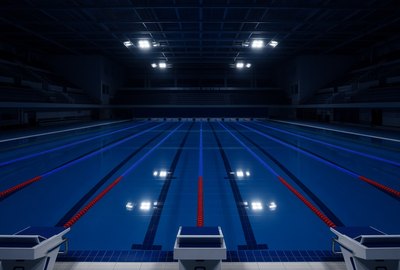
Phelps imagined himself diving off the blocks and swimming flawlessly in slow motion, down to the wake behind his body and the water dripping off his lips.
This paid off at the 2008 Beijing Olympics. In the 200m butterfly final, his goggles filled with water and he could not see. Duhigg reports that Phelps stayed calm and counted his strokes, because he had rehearsed the race so many times. He won gold in a world record time.
Lesson: Rehearse the details, and rehearse what you will do if something goes wrong.
Jack Nicklaus: Going to the Movies
Golfer Jack Nicklaus, winner of 18 major championships, described his visualisation routine in his 1974 book Golf My Way:
“I never hit a shot, even in practice, without having a very sharp, in-focus picture of it in my head. It’s like a color movie. First I ‘see’ the ball where I want it to finish, nice and white and sitting up high on the bright green grass. Then the scene quickly changes and I ‘see’ the ball going there: its path, trajectory, and shape, even its behavior on landing. Then there’s a sort of fade-out, and the next scene shows me making the kind of swing that will turn the previous images into reality.”
His three-step routine is easy to copy:
- See the result.
- See the path to the result.
- See yourself performing the action that creates it.
Lesson: Work backwards from the outcome to the action.
Arnold Schwarzenegger: A Clear Vision
Arnold Schwarzenegger has said that having a clear vision guided each stage of his life. The first chapter of his book Be Useful (2023) is titled “Have a Clear Vision”. Speaking to NPR, he said (NPR):
“If you take some time and create a vision for yourself and create a goal for yourself — and then chase that goal no matter how difficult it may be — life becomes kind of fun.”
He described the visions he chased in turn: becoming Mr. Universe, becoming the greatest bodybuilder in the world, coming to America, becoming a leading man in films and running for governor. He was also open about losses along the way, including coming second in his first Mr. Universe contest at 19.
Lesson: A clear vision gives direction, and setbacks are part of the chase.
Jim Carrey: Visualising on Mulholland Drive
Before he was famous, actor Jim Carrey would drive up into the hills above Los Angeles and visualise success. On The Oprah Winfrey Show in 1997, he said (Showbiz Cheat Sheet):
“I would visualize having directors interested in me and people that I respected saying, ‘I like your work’, and I would visualize things coming to me that I wanted … and I had nothing at that time, but it just made me feel better.”
He also wrote himself a $10 million cheque for “acting services rendered”, dated Thanksgiving 1995 (Fox Business). And he was clear that visualisation is not enough on its own: “you can’t just visualize and then, you know, go eat a sandwich.”
Lesson: Visualisation can lift your mood and keep you motivated while you do the work.
Conor McGregor: See It, Then Say It
Mixed martial artist Conor McGregor visualises specific moves and outcomes before fights. In 2015 he explained (The Irish Times):
“If you can see it here, and you have the courage enough to speak it, it will happen. So. I see these shots, I see these sequences, and I don’t shy away from them.”
Lesson: Visualise specific actions in sequence, and commit to your goal.
For more famous names, see our roundup of celebrities who use manifestation.
What the Research Says
Visualisation is one of the best-studied tools in sport psychology.
| Question | What studies found | Source |
|---|---|---|
| Does mental practice improve performance? | A meta-analysis of 35 studies found mental practice had a positive, significant effect on performance | Driskell, Copper and Moran, 1994 |
| Does self-talk help too? | Self-talk interventions had a moderate positive effect on sports performance | Hatzigeorgiadis et al., 2011 |
| How do you turn a vision into action? | Pairing a positive vision with thinking about obstacles and making a plan helps people act on goals | Oettingen, 2012 |
Researchers think mental rehearsal works partly because imagining a movement activates many of the same brain areas as doing it. That is why process visualisation, like Phelps’s videotape and Nicklaus’s movie, is especially useful for skills.
The research on outcome-only fantasies adds a useful note. Psychologist Gabriele Oettingen found that combining a positive picture of the goal with a clear look at the obstacles works better for taking action. Phelps’s rehearsal of things going wrong is a great example.
A Step-by-Step Visualisation Method
Use this five-step routine, based on what top achievers do. It takes 5 to 10 minutes.
- Relax. Sit or lie down, close your eyes and take five slow breaths.
- See the outcome. Picture the result you want, as Nicklaus did, with as much detail as you can.
- Run the movie. Watch yourself performing each step well, from start to finish, as Phelps did. Use all your senses.
- Add an obstacle. Imagine one thing going wrong and see yourself handling it calmly.
- Feel it and act. Notice how success feels. Then open your eyes and take one real action toward the goal.
| Goal | What to visualise |
|---|---|
| A presentation | Walking in calmly, the first sentence, handling a tough question |
| An exam | Reading the paper, recalling answers, managing time |
| A sports event | The warm-up, key moves, the finish |
| A job interview | Your greeting, your best stories, a confident close |
Practise daily for two weeks before an important event. Combine it with real practice, as every achiever on this page did.
Tools That Support Visualisation
- Vision boards keep your outcome in sight every day. See celebrities who use manifestation.
- Scripting means writing your ideal outcome as if it has happened. See our manifestation guide.
- Self-hypnosis deepens relaxation before visualising. See self-hypnosis through writing.
- Goal setting makes the vision concrete. See SMART goals.
- Affirmations support belief. See Muhammad Ali’s self-belief.
Frequently Asked Questions
Which famous athletes use visualisation?
Well-documented examples include swimmer Michael Phelps, who rehearsed perfect races nightly; golfer Jack Nicklaus, who pictured every shot like a movie; and mixed martial artist Conor McGregor, who visualises specific sequences before fights.
What was Michael Phelps’s videotape?
It was a mental rehearsal of a perfect race. His coach Bob Bowman told him to “watch the videotape” before sleep and on waking, imagining every detail of swimming flawlessly.
Does visualisation really work?
A meta-analysis of 35 studies found mental practice had a positive, significant effect on performance. It works best combined with physical practice.
How long should I visualise each day?
Five to ten minutes a day is a good start. Many athletes visualise before sleep and on waking, as Phelps did.
Should I visualise the outcome or the process?
Both. Top achievers focus strongly on the process and on handling obstacles, as well as the result.
What did Jack Nicklaus call his visualisation?
He described it as going to the movies: seeing where the ball would finish, its path there, and then the swing that would make it happen.
Key Takeaways
- Visualisation means vividly imagining yourself performing or achieving a goal.
- Michael Phelps rehearsed perfect races nightly and rehearsed what to do if things went wrong.
- Jack Nicklaus pictured the result, the path and then the swing before every shot.
- Research shows mental practice improves performance, especially alongside physical practice.
- Visualise the process and obstacles, then take real action.
Explore More on Self Help Supermarket
Use these pages alongside this one:
- Visualisation – the complete guide
- Celebrities Who Use Manifestation – real quotes and methods
- Muhammad Ali’s Self-Belief – affirmations and confidence
- The Raikov Effect – deep-trance role-taking for skills
- SMART Goals – turn a vision into a plan
- Self-Hypnosis Through Writing – relax deeply before you visualise
- Reality Shifting – the visualisation trend and what research says
- Browse all self-help techniques – compare every method on Self Help Supermarket.
Sources
- Duhigg, C. (2012). How good habits can win gold medals (excerpt from The Power of Habit). The Globe and Mail. https://www.theglobeandmail.com/life/health-and-fitness/health/conditions/how-good-habits-can-win-gold-medals/article549051/
- Nicklaus, J., with Bowden, K. (1974). Golf My Way. New York: Simon and Schuster.
- NPR (2023). Arnold Schwarzenegger has one main guiding principle: Be useful. 6 October 2023. https://www.npr.org/2023/10/06/1203694351/arnold-schwarzenegger-has-one-main-guiding-principle-be-useful
- Showbiz Cheat Sheet. Why Jim Carrey wrote himself a $10 million check before he was famous. https://www.cheatsheet.com/news/why-jim-carrey-wrote-himself-a-10-million-check-before-he-was-famous.html/
- Fox Business. What is Jim Carrey’s net worth? https://www.foxbusiness.com/entertainment/what-is-jim-carreys-net-worth
- Early, K. (2015). Mystic McGregor is now a law unto himself. The Irish Times, 14 December 2015. https://www.irishtimes.com/sport/mystic-mcgregor-is-now-a-law-unto-himself-1.2465319
- Driskell, J. E., Copper, C., and Moran, A. (1994). Does mental practice enhance performance? Journal of Applied Psychology, 79(4), 481–492. https://doi.org/10.1037/0021-9010.79.4.481
- Hatzigeorgiadis, A., Zourbanos, N., Galanis, E., and Theodorakis, Y. (2011). Self-talk and sports performance: A meta-analysis. Perspectives on Psychological Science, 6(4), 348–356. https://doi.org/10.1177/1745691611413136
- Oettingen, G. (2012). Future thought and behaviour change. European Review of Social Psychology, 23(1), 1–63. https://doi.org/10.1080/10463283.2011.643698
Self Help Supermarket guides are for general information and are not a substitute for professional medical or psychological advice.