
What is Sound Healing?
Sound healing is a therapeutic practice that uses specific sound frequencies, vibrations, and instruments to promote physical, emotional, and mental wellbeing. Practitioners use tools such as Tibetan singing bowls, crystal bowls, gongs, tuning forks, and voice to create therapeutic soundscapes that encourage relaxation, reduce stress, and support the body’s natural healing processes.
Sound healing has roots in ancient cultures spanning thousands of years, with Tibetan singing bowls used in Buddhist meditation practices for approximately 2,400 years. Ancient Greeks, including Pythagoras, prescribed music and vibrations to treat both mental and physical ailments, while gongs have been used in Chinese healing traditions since around 4000 BCE. Today, sound healing is experiencing a resurgence as part of the growing complementary and alternative medicine sector, with the UK wellness industry valued at over £24 billion and 42% of UK adults having tried alternative therapies according to recent surveys.
How Sound Healing Works
Sound healing operates on the principle that everything in the universe – including the human body – vibrates at specific frequencies. When the body experiences stress, illness, or emotional imbalance, these natural frequencies can become disrupted. Sound healing aims to restore balance by introducing therapeutic sound frequencies that resonate with the body’s natural vibration patterns.
The human body is approximately 60% water, which serves as an excellent conductor of sound. When instruments like singing bowls or gongs are played, the sound waves travel through the body at four times the speed they travel through air, reaching every cell and potentially influencing physiological processes at a deep level.
The Science Behind Sound Healing
Research into sound healing is growing, with several studies demonstrating measurable effects on both physiological and psychological states. A 2016 observational study published in the Journal of Evidence-Based Integrative Medicine by researchers at the University of California, San Diego found that participants experienced significant reductions in tension, anger, fatigue, anxiety, and depression after a single 60-minute singing bowl meditation session. The study, led by Dr Tamara Goldsby, also noted improvements in spiritual wellbeing.
The proposed mechanisms behind sound healing include:
Brainwave Entrainment: When the brain is exposed to rhythmic sound stimulation, neural oscillations can synchronise with the external frequency—a phenomenon called entrainment. Different brainwave states correlate with different mental states: beta waves (13-30 Hz) with alertness, alpha waves (7-13 Hz) with relaxation, theta waves (4-7 Hz) with meditation, and delta waves (0.5-4 Hz) with deep sleep. Sound healing may help shift brainwave patterns from stressed beta states to calmer alpha or theta states.
Parasympathetic Activation: Research suggests that harmonic sounds can activate the parasympathetic nervous system, triggering the body’s rest-and-digest response. This can lead to measurable reductions in heart rate, blood pressure, and cortisol levels.
Vibrational Resonance: The vibrations from sound healing instruments may help release muscular tension, improve circulation, and stimulate the body’s natural healing responses at a cellular level.
Key Benefits of Sound Healing
Sound healing offers a range of potential benefits that address physical, emotional, and mental wellbeing. While research is still developing, current evidence suggests the following benefits:
- Stress and Anxiety Reduction – Multiple studies indicate that sound healing sessions can significantly reduce feelings of stress and anxiety. A UCLA Health review notes that sound baths produce a state of relaxation that may reduce stress and anxiety by giving the brain a focused listening task, helping quiet racing thoughts and lower heart rate and blood pressure.
- Improved Mood and Emotional Release – Sound healing sessions often facilitate emotional release and improved mood states. Research shows participants commonly report reduced feelings of anger, depression, and fatigue after sessions, with increased feelings of peace and inner calm.
- Enhanced Relaxation and Sleep Quality – The deep relaxation induced by sound healing can improve sleep quality. A 2019 meta-analysis published in PLOS ONE found that music and rhythmic sound therapies improved sleep quality in both healthy adults and people with insomnia. Sound healing activates delta brainwaves, which are essential for deep, restorative sleep.
- Pain Management Support – Emerging research suggests sound therapy may help with pain management. A 2015 study published in Pain Research and Management found that music and sound therapy significantly reduced chronic pain in elderly patients. The vibrations from instruments may help relax tense muscles and improve circulation.
- Increased Mindfulness and Spiritual Wellbeing – Many participants report heightened spiritual awareness and a sense of connection following sound healing sessions. The meditative quality of sound baths can help individuals achieve states of deep introspection without requiring formal meditation training.
Who is Sound Healing Best For?
Sound healing is an accessible practice suitable for most people, from complete beginners to experienced meditators. Its passive nature makes it particularly appealing to those who find traditional seated meditation challenging.
Sound healing may help if you:
- Experience chronic stress or anxiety and seek non-pharmaceutical relief
- Struggle with traditional meditation but want the benefits of a meditative state
- Have difficulty sleeping or suffer from insomnia
- Want to support your emotional wellbeing and process difficult feelings
- Seek complementary support alongside conventional medical treatment
- Are looking for a group wellness experience or community connection
- Want to enhance your existing mindfulness or yoga practice
Sound healing is particularly beneficial for individuals who prefer passive therapies – you simply lie down, close your eyes, and allow the sounds to wash over you. This makes it accessible even for those with physical limitations that might prevent participation in more active practices.
Types of Sound Healing Techniques
Sound healing encompasses several distinct approaches, each using different instruments and methods to achieve therapeutic effects.
Sound Baths
A sound bath is an immersive group experience where participants lie down comfortably while a practitioner plays various instruments, creating a “bath” of therapeutic sound. Sessions typically last 60-90 minutes and may incorporate singing bowls, gongs, chimes, drums, and other instruments. Sound baths are the most accessible and popular form of sound healing, widely available in yoga studios, wellness centres, and dedicated sound healing spaces across the UK.
Gong Baths
Gong baths specifically use large gongs to create powerful, layered vibrations. Dating back to ancient civilisations, gong baths produce dynamic, ocean-like waves of sound that envelop participants. The complex overtones and frequencies produced by gongs can induce deep relaxation and meditative states. Practitioners trained as Gong Masters undergo specific certification, often through organisations like the College of Sound Healing.
Singing Bowl Therapy
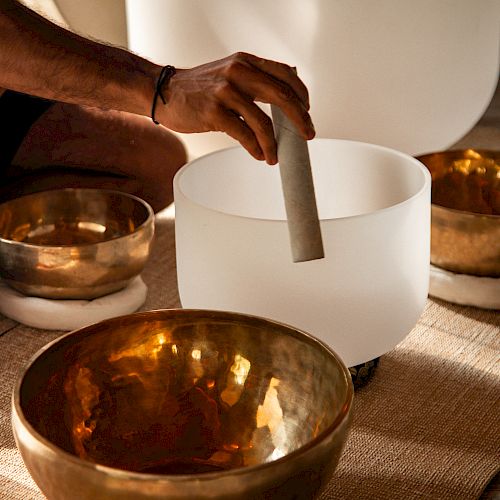
Tibetan (Himalayan) singing bowls and crystal singing bowls are among the most recognisable sound healing instruments. Tibetan bowls, traditionally made from a combination of metals, produce rich, warm tones when struck or circled with a mallet. Crystal singing bowls, made from quartz crystal, produce pure, clear tones. Bowls may be placed around or directly on the body during individual sessions, allowing vibrations to penetrate deeply.
Tuning Fork Therapy
Tuning fork therapy uses calibrated metal forks that vibrate at specific frequencies when struck. Practitioners apply vibrating tuning forks to specific points on the body – similar to acupuncture points – to help release tension, balance energy, and promote healing. This technique can be used in individual therapy sessions for targeted treatment of specific concerns.
Binaural Beats
Binaural beats are an auditory phenomenon created when two slightly different frequencies are presented to each ear through headphones. The brain perceives a third “beat” at the frequency difference between the two tones. For example, if 300 Hz is played in one ear and 310 Hz in the other, the brain perceives a 10 Hz beat. This technique is used to encourage specific brainwave states and is accessible through apps and audio recordings for home use.
Vocal Toning and Chanting
Vocal toning uses the human voice to create healing vibrations within the body. Techniques include singing single tones, overtoning (producing multiple tones simultaneously), and mantra chanting. The vibrations created by vocalisation can stimulate the vagus nerve, promoting relaxation and emotional regulation. This approach requires no external instruments and can be practised independently.
How to Get Started with Sound Healing
Step 1: Choose Your Entry Point
For beginners, a group sound bath is the ideal starting point. These sessions are widely available, affordable, and require no prior experience. Look for classes at local yoga studios, wellness centres, or dedicated sound healing spaces. Many practitioners also offer virtual sound baths via Zoom, making sound healing accessible from home.
Step 2: Find a Qualified Practitioner
When seeking a sound healing practitioner, look for those with recognised qualifications. In the UK, reputable training bodies include the College of Sound Healing, the Sound Healing Academy, and the British Academy of Sound Therapy (BAST). Qualified practitioners are often registered with professional bodies such as the Complementary Medical Association (CMA) or the Therapeutic Sound Association.
Step 3: Prepare for Your Session
Before attending a sound bath or individual session, wear comfortable, loose clothing. Bring a yoga mat, blanket, and pillow if not provided. Avoid heavy meals beforehand, but ensure you’re not attending on an empty stomach. Arrive a few minutes early to settle in and communicate any health concerns to the practitioner.
Step 4: Embrace the Experience
During a session, simply lie down, close your eyes, and allow the sounds to wash over you. There’s no right or wrong way to experience sound healing—some people feel deeply relaxed, others experience emotional release, visual imagery, or even fall asleep. All responses are valid. After the session, drink plenty of water and allow yourself time to gradually return to normal activity.
Sound Healing vs Other Techniques
| Aspect | Sound Healing | Meditation | Breathwork | Hypnotherapy |
|---|---|---|---|---|
| Best For | Stress relief, relaxation, sleep | Mental clarity, focus, presence | Immediate calm, energy shift | Habit change, phobias |
| Session Length | 60-90 minutes | 10-60 minutes | 5-60 minutes | 60-90 minutes |
| Time to Results | Often immediate relaxation | 8+ weeks for lasting change | Immediate to minutes | 4-8 sessions |
| Self-Practice | Limited (instruments needed) | Yes | Yes | Limited |
| Effort Required | Passive (lying down) | Active (mental focus) | Active (controlled breathing) | Passive |
| Cost Range (UK) | £15-30 group; £50-120 individual | Often free/low-cost | £20-80 per session | £60-150 per session |
Common Myths About Sound Healing
Myth 1: Sound healing is just relaxing music
Reality: Sound healing involves specific frequencies, instruments, and techniques designed to create physiological responses beyond simple relaxation. The vibrations from instruments like singing bowls and gongs travel through the body’s tissues and cells, potentially influencing biological processes in ways that recorded music cannot replicate.
Myth 2: There’s no scientific evidence for sound healing
Reality: While research is still developing, there is a growing body of scientific evidence supporting sound healing’s effects. Studies published in peer-reviewed journals have demonstrated measurable reductions in anxiety, depression, and stress markers following sound healing sessions. Research continues at institutions including the University of California, San Diego.
Myth 3: You need to be spiritual or believe in it for sound healing to work
Reality: Sound healing works through physiological mechanisms – vibration, resonance, and neural entrainment – that operate regardless of belief. While many people have spiritual experiences during sessions, the relaxation response and stress reduction benefits are available to anyone, whether they hold spiritual beliefs or approach the practice from a purely scientific perspective.
Myth 4: Sound healing can replace medical treatment
Reality: Sound healing is a complementary therapy designed to support – not replace – conventional medical care. Reputable practitioners always advise clients to maintain their existing medical treatments and consult healthcare providers about incorporating sound healing into their overall wellness plan.
What to Expect in Your First Session
A typical first sound bath or sound healing session follows a structured format designed to ease you into the experience.
Arrival (10-15 minutes): You’ll arrive at the venue – often a yoga studio, wellness centre, or dedicated healing space – and find a comfortable spot to lie down. The practitioner will provide yoga mats, blankets, and sometimes eye masks. Take this time to settle in and get comfortable.
Introduction (5-10 minutes): The practitioner will briefly explain what will happen during the session and may lead a short guided relaxation or breathing exercise to help you transition from your busy day.
Sound Journey (45-60 minutes): The main portion of the session involves lying still with eyes closed while the practitioner plays various instruments. You may hear singing bowls, gongs, chimes, drums, or other sound tools. The sounds will ebb and flow, sometimes gentle and meditative, sometimes building in intensity.
Integration (5-10 minutes): The session concludes with a gradual return to waking consciousness. The practitioner will slowly bring the sounds to a close and guide you through a gentle awakening process. Take your time sitting up and returning to full alertness.
Questions to ask your practitioner:
- What instruments will you use during the session?
- What qualifications and training do you have?
- Are there any contraindications I should be aware of?
- What should I do if I experience strong emotions during the session?
Contraindications and Safety Considerations
Sound healing is generally considered a low-risk therapy suitable for most people. However, certain conditions warrant caution:
Consult your doctor before attending if you have:
- Epilepsy or seizure disorders (certain frequencies may potentially trigger seizures)
- Severe mental health conditions
- Heart conditions or a pacemaker
- Hearing aids or hearing impairments (intensity may cause discomfort)
- Pregnancy (some practitioners advise caution, particularly with gongs)
General safety considerations:
- Inform your practitioner of any health conditions before the session
- If you experience discomfort during a session, it’s acceptable to leave quietly
- Sound healing should complement, not replace, conventional medical treatment
- Choose practitioners with recognised qualifications and professional insurance
Frequently Asked Questions
Is sound healing scientifically proven?
Sound healing has growing scientific support, though research is still developing. Studies published in peer-reviewed journals demonstrate measurable effects on anxiety, mood, and physiological markers. A 2016 study at UC San Diego found significant reductions in tension, anxiety, and depression after singing bowl meditation. However, researchers acknowledge more rigorous studies are needed.
How long does sound healing take to work?
Many people experience immediate relaxation during their first session. However, cumulative benefits typically develop over multiple sessions. Regular practice – attending weekly or fortnightly sessions—tends to produce more sustained improvements in stress levels, sleep quality, and emotional wellbeing.
Can I practise sound healing at home?
Yes, several forms of sound healing can be practised at home. Binaural beats are accessible through apps and recordings using headphones. You can purchase singing bowls for home use, though learning proper technique enhances effectiveness. Vocal toning and chanting require no equipment. However, the full immersive experience of professional instruments is difficult to replicate at home.
How much does sound healing cost in the UK?
Group sound baths typically cost £15-30 per session, with some online sessions available from £5-15. Individual one-to-one sessions range from £50-120 for 60-90 minutes. Private sessions at home may cost £120-350 including travel. Corporate wellness sessions typically start from £650 for groups of up to 25 people.
Is sound healing suitable for anxiety and depression?
Research suggests sound healing may help reduce symptoms of anxiety and depression as part of a comprehensive wellbeing approach. A 2016 study found participants reported significantly reduced anxiety and depressed mood after singing bowl meditation. However, sound healing should complement—not replace—professional mental health treatment for clinical conditions.
Can I combine sound healing with other therapies?
Yes, sound healing combines well with many complementary practices. It’s often incorporated into yoga classes during savasana, paired with breathwork, or used alongside massage and Reiki. Many people find sound healing enhances their meditation practice. Always inform practitioners of other therapies you’re using.
Are there any risks or side effects?
Sound healing is generally considered safe with minimal side effects. Some people experience emotional release during sessions, which may feel intense but is typically therapeutic. Rarely, individuals may experience temporary dizziness or disorientation immediately after sessions. People with epilepsy, severe mental health conditions, or hearing impairments should consult their doctor beforehand.
How do I find a qualified sound healing practitioner?
Look for practitioners trained through recognised institutions such as the College of Sound Healing, the Sound Healing Academy, or the British Academy of Sound Therapy. Check for registration with professional bodies like the Complementary Medical Association (CMA) or Therapeutic Sound Association. Ask about qualifications, insurance, and experience before booking.
Summary
Sound healing is an ancient practice with growing modern relevance, using therapeutic sound frequencies and instruments to promote relaxation, reduce stress, and support overall wellbeing. With scientific research increasingly validating its effects on anxiety, mood, and physiological stress markers, sound healing offers an accessible, low-risk complementary therapy suitable for most people. Whether you’re seeking stress relief, better sleep, or simply a deeply relaxing experience, sound healing provides a unique pathway to wellness that requires no prior experience or special skills—just the willingness to lie back and let the sounds wash over you.
Find Sound Healing Practitioners on SelfHelpSupermarket.com
Ready to experience sound healing for yourself? Browse our directory of qualified sound healing practitioners, gong masters, and sound bath facilitators across the UK.